When a woman is unable to use her own eggs, donor egg IVF is the answer. Mostly, doctors advise ladies of advanced maternal age (normally 42 years and above), those who have premature ovarian failure, those who have not had success with several IVF cycles, or those who have genetic disorders. A donor egg IVF cycle in India would cost Rs. 2.5 to 4.5 lakhs, and the expected success rate is around 50 to 60 percent. The results are not so much dependent upon the recipient’s age, as the quality of donor eggs is the main reason that affects the outcome.
Zemya IVF & Fertility Clinics, known as the Best IVF Centre in Delhi, commits to providing an extremely caring and professional environment for Donor Egg IVF procedures. With our best-in-class embryology laboratories and strict adherence to all Indian regulations, we facilitate your way through this life-changing process with ease.
What is Donor Egg IVF?
In donor egg IVF, a screened, anonymous donor retrieves eggs (oocytes), a laboratory fertilises them with the intended father’s or a donor’s sperm, and the intended mother or a gestational carrier receives the resulting embryo (the early-stage fertilised cell cluster) in her uterus.
The recipient carries the pregnancy and is the legal and birth mother, but the child does not share the recipient’s genetic material. In India, the entire process is regulated under the Assisted Reproductive Technology (Regulation) Act, 2021.
| Key Element | What It Means |
| Egg source | Anonymous, ART-registered donor aged 23 to 35 years. |
| Sperm source | Intended father or a screened sperm donor. |
| Embryo carrier | Intended mother (recipient) in most cases. |
| Genetic link | Child is not genetically related to the recipient. |
| Regulating law | ART (Regulation) Act, 2021 and ICMR ART guidelines. |
Why Donor Egg IVF Matters for Indian Patients in 2026
For many Indian couples and single women navigating fertility care, donor egg IVF is the treatment that finally moves the conversation from “why isn’t this working?” to “this can work.” After the mid-30s, the quality of eggs gradually decreases and after 40 it drops drastically. So, women suffering from diminished ovarian reserve, premature ovarian insufficiency, or those experiencing repeated IVF failures are often able to achieve a much higher success rate when they use donor eggs.
Besides that, the 2021 ART Act has made the procedure transparent, as law now regulates donor screening, anonymity, and embryo limitations, protecting both donors and intended parents.
Choosing donor egg IVF rarely serves as a first option; individuals usually make it a considered decision after several attempts, careful counselling, and an honest conversation with a fertility specialist at Zemya IVF & Fertility Clinics about what the eggs themselves are likely to deliver.
When is Donor Egg IVF Recommended?
A donor egg cycle is not a default treatment. Doctors usually recommend it only after diagnostic workups, hormonal testing, and often one or more own-egg IVF attempts indicate that egg quality or quantity is the primary barrier to pregnancy. A specialist at Zemya IVF & Fertility Clinics, the Best IVF Centre in Delhi, will typically suggest donor eggs in five clearly defined situations:
1. Advanced Maternal Age (Usually 42 and Above)
Egg quality and chromosomal normality drop steeply after a woman’s early forties. For women over 42, own-egg IVF live birth rates often fall into single digits, while donor egg IVF restores success rates to 50 to 60 percent because the eggs come from a healthy donor aged 23 to 35. Age alone is rarely the only criterion, but it is the most common one.
2. Diminished Ovarian Reserve or Premature Ovarian Insufficiency
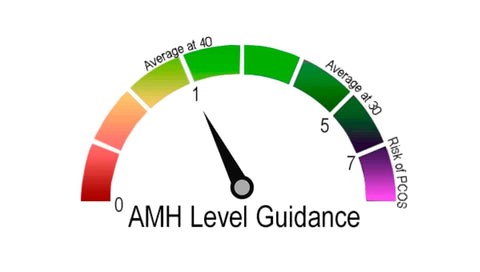
Women with low AMH (anti-Mullerian hormone, a marker of egg supply), high FSH (follicle-stimulating hormone), or premature ovarian insufficiency (loss of normal ovarian function before age 40) may not produce enough mature eggs even with high doses of stimulation medication. If repeated stimulation cycles result in a very low number of eggs or poor-quality embryos, doctors generally consider donor eggs to be the most efficient option.
Multiple IVF failures or embryo development issues
In reality, two or more properly attempted IVF cycles have failed, mostly if there has been poor embryo development at the blastocyst (Day 5 to 6 embryo) stage, points most likely to the eggs being at fault rather than the uterus. So, in such instances, a Zemya fertility specialist may introduce the discussion of donor eggs plus other options, including PGT-A (preimplantation genetic testing for aneuploidy), to establish whether it is the egg or the implantation environment that is the limiting factor.
4. Known Genetic Conditions in the Intended Mother
When the intended mother carries a heritable genetic condition that cannot reliably be screened out using PGT-M (preimplantation genetic testing for monogenic disorders), medical professionals sometimes recommend donor eggs to avoid passing on the condition. This is a sensitive, counselling-led decision rather than a clinical default.
5. Surgical Loss of Ovaries or Cancer Treatment
Women who have undergone bilateral oophorectomy (surgical removal of both ovaries), chemotherapy, or pelvic radiation often have no remaining functional eggs. Donor egg IVF, sometimes paired with a frozen embryo transfer protocol, is usually the only realistic pathway to pregnancy in these cases.
Underlying Causes Behind the Need for Donor Eggs
Most women who are advised to consider donor eggs share one or more identifiable causes. These are not failures of effort or willpower; they are biological factors that fertility medicine has well-defined responses to:
- Age-related egg decline: Both the number and chromosomal quality of eggs decline naturally from the mid-30s, accelerating rapidly after 40.
- Premature ovarian insufficiency: Normal ovarian function ceases prematurely, i.e. before 40 years of age. In some cases, the cause may be autoimmune, genetic, or remain unknown.
- In cases of severe endometriosis (a condition marked by the presence of tissue similar to the lining of the uterus in locations outside the uterus), the condition can damage the ovaries to such an extent that it drastically reduces the egg reserve.
- Genetic factors: Genetic disorders like Turner syndrome or Fragile X-related ovarian insufficiency may drastically reduce the quantity of eggs in the ovaries.
- Iatrogenic causes: Therapies like chemotherapy, radiation, or surgical removal of the ovaries that doctors perform for life-saving or other critical medical interventions.
- Repeated poor IVF response: Multiple cycles producing few eggs or embryos that consistently arrest before a transfer can take place.
What to Do If Your Doctor Suggests Donor Egg IVF
Being told that donor eggs may be your best path forward is an emotionally heavy moment. The right next steps are practical, paced, and grounded in good information rather than urgency.
Step 1: Seek Clarity Before Committing
Ask the specialist to explain exactly why they recommend donor eggs, what the success rates would be with your own eggs versus donor eggs, and whether you should complete any other workup, such as PGT-A or a thorough male-factor evaluation, first. A second opinion is reasonable and welcomed at reputable centres. At Zemya IVF & Fertility Clinics, you have the option of booking a fertility consultation where we can discuss your detailed reports together.
Step 2: Mapping the Legal, Medical, and Emotional Aspects
Know the ART (Regulation) Act, 2021 well: donors should be between 23 and 35, keep them completely anonymous, and single donors can only donate to one couple as per the updated mandates. The emotional side is critical; a fertility counsellor can help you work through the grieving of a lost genetic link which is an essential step before signing any consents.
Many patients also benefit from reading about IVF success rates by age and recurrent miscarriage causes to understand where donor eggs fit within the wider treatment landscape.
When to See a Fertility Specialist About Donor Eggs
Some signs warrant a same-week consultation rather than a wait-and-see approach. The earlier a clinic plans a donor egg cycle, the smoother the matching, screening, and transfer timing tend to be.
| Sign or Situation | Why It Matters |
| Age 42+ with no successful pregnancy | Own-egg IVF success drops sharply; donor eggs restore the success curve. |
| Two or more failed IVF cycles | Suggests egg quality rather than a uterine cause; donor eggs may be considered. |
| AMH below 0.5 ng/mL | Indicates very low ovarian reserve; few eggs are likely to be obtained with stimulation. |
| Diagnosed premature ovarian insufficiency | Donor eggs are usually the most effective treatment pathway. |
| History of cancer treatment or ovarian surgery | Ovarian function may be permanently reduced or absent. |
If any of the situations above apply to you, the most useful next step is a consultation with an expert team who can review your reports and walk you through whether donor egg IVF is the right call for your case.
Cost & Success Rate Outcomes for Donor Egg IVF in India (2026)
Donor egg IVF in India is significantly more cost-effective than in most Western markets while offering comparable clinical outcomes. The figures below reflect typical ranges across well-regulated, ART-registered fertility centres like Zemya IVF & Fertility Clinics.
| Outcome Metric | Typical Range | Notes |
| Cost per cycle | ₹2.5 to 4.5 lakh | Includes donor compensation, screening, IVF, and embryo transfer. |
| Clinical pregnancy rate | 55 to 65 percent | Per embryo transfer using fresh or frozen donor eggs. |
| Live birth rate | 50 to 60 percent | Largely independent of recipient age up to the mid-50s. |
| Add-on: ICSI | ₹20,000 to 50,000 | Often standard with donor egg cycles for fertilisation reliability. |
| Add-on: PGT-A | ₹60,000 to 1.2 lakh | Recommended in selected cases; discuss with your fertility specialist. |