Within the field of reproductive medicine, the search for increased success rates of IVF (In-vitro fertilization) has surpassed incredible technological advances. The advent of standard intracytoplasmic sperm injection (ICSI) revolutionized treatment for couples suffering from male factor infertility, but research discovered that this method of selecting a motile sperm that “looks” good under the microscope is not always sufficient, leading to the development of the physiological intracytoplasmic sperm injection (PICSI).
PICSI is employed at Zemya IVF & Fertility Clinics, the Best IVF Clinic in Delhi, to deliver the highest possible quality embryos through our assisted reproduction technology procedures. As an advanced Fertility Clinic in Delhi, we are aware that the key to having a healthy baby is choosing the right sperm with the greatest functional ability.
What is Physiological Intracytoplasmic Sperm Injection (PICSI)?
Physiological Intracytoplasmic Sperm Injection (PICSI) is an innovative sperm selection technique based on a natural method. During conception, the mature egg is surrounded by hyaluronic acid. This is the major element of the cumulus cells surrounding the oocyte.
It is only when the sperm has matured properly and has DNA that is free of fragmentation and nuclear condensation that it is physiologically able to bind to the hyaluronic acid. It allows an embryologist to select a healthy sperm that, in a natural setting, would have been the egg that would have been “chosen” from the sperm cell population of the semen.
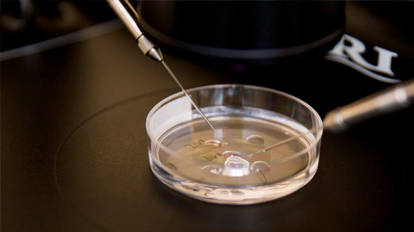
Conventional ICSI vs. PICSI
To comprehend the concept of the PICSI method, one needs to know the difference between conventional IVF and this method, as well as the conventional ICSI method.
- Conventional ICSI procedure(traditional IVF methods): Under the conventional ICSI process, an expert, either a reproductive endocrinologist or an embryologist, chooses a sperm cell based sperm quality, sperm morphology and motility only.
- The PICSI Method: Here, a special dish coated with hyaluronic acid hydrogel is used to put the semen sample. The spermatozoa has to be used, it will be the one that is mature and of the best functional quality (advanced sperm selection technique) and optimal fertility potential, which would have adhered to the gel. The embryologists pick these bound sperm.
The Role of Hyaluronic Acid Binding
The binding capacity of the fully developed sperm to hyaluronic acid serves as an indicator of its nuclear maturity and genomic stability. Clinical research carried out in the field of reproductive medicine indicates that sperm that are attached to hyaluronic acid have a reduced chance of having chromosomal anomalies and cytoplasmic ejection.
Selection for mature spermatozoa by hyaluronic acid binding is working as a form of genetic filtering of potentially normal appearing but genetically abnormal sperm.
This results in:
- More successful fertilisation.
- Better embryo development.
- Having a significantly lower survival rate than poor graders. Increased IVF success rates and IVF outcomes for couples with several abortions.
The PICSI Procedure: Step-by-Step
The PICSI process carried out at our IVF Centre in Delhi strictly adheres to the laboratory process, thus ensuring maximum success in the IVF process.
- Ovarian Stimulation: The female partner is stimulated to release multiple eggs, which are then harvested.
- Semen Sample Collection: The male partner collects his semen sample on the day of egg retrieval.
- PICSI Dish: The collected semen sample is placed into a PICSI dish that has been coated with micro dots of hyaluronic acid.
- Selection: The embryologist is able to select the spermatozoa using their binding capacity to the dots. Those bound are non-motile but “tail-wagging” (beating).
- Microinjection: The chosen best sperm is drawn into a thin needle, and an intracytoplasmic sperm injection (ICSI) is performed, injecting the sperm directly into the egg successfully.
Who Should Consider PICSI?
Though physiological ICSI proves very effective in treatment, it is prescribed as IVF therapy only when there are risk factors present:
- High DNA Fragmentation: If a semen analysis reveals a high level of sperm with fragmented DNA.
- Recurrent Miscarriage: If there is evidence of multiple abortions, possibly caused by male infertility.
- Poor Embryo Quality: In the last IVF cycle, there was a low-quality embryo that failed to be implanted.
- Advanced Paternal Age: Risk of chromosomal abnormalities in sperm rises with age.
- Unexplained infertility: where conventional IVF treatment has failed to result in conception.
IVE Success Rates and PICSI
Clinical research on physiological intracytoplasmic sperm selection demonstrates its importance as a “quality filter”. Through improving sperm selection, we guarantee ourselves the use of only those sperm with the highest level of fertility.
The secondary results of applying the PICSI technology may be seen in the low incidence of miscarriage. This happens because, through selecting sperm with healthy DNA, the embryo will also have healthy genetic material, thus achieving successful fertilization.
Why Choose Zemya IVF & Fertility Clinics?
Best IVF Clinic in Delhi. Zemya IVF is considered to be the best IVF Clinic in Delhi and is leading the assisted reproductive technology.
We know that for male factor infertility, a deep eye is required.
Professional Embryologists- Our team is experts in the ICSI method and techniques.
Advanced Laboratory: Our Delhi IVF Centre has state-of-the-art hyaluronic acid binding technology. Personalized Treatment: We will never treat you in a one-size-fits-all way.
Only your fertility specialist, who will evaluate your semen sample, can decide whether PICSI is the right IVF treatment to be used in your particular situation.
Frequently Asked Questions
Whereas ordinary ICSI is excellent for cases with low sperm concentration, PICSI takes it to the next level through its additional screening process, where physiological binding capacity is verified. It may be said that PICSI works much better in the case of high DNA fragmentation in sperm.
PICSI involves more lab work than ordinary ICSI to enable the sperm cells to adhere to hyaluronic acid; nevertheless, it does not affect the IVF treatment schedule.
No other medical complications to the patient or syringe of egg injected successfully. It is a non-invasive sperm selection method in the laboratory.
While there are no fertility treatments where the success rate is 100%, physiological intracytoplasmic sperm injection holds the potential to dramatically increase the chances of pregnancy by selecting only mature sperm.
PICSI is often an “add-on” for a “standard IVF treatment cycle”. All advanced assisted reproductive technology services are offered at clear pricing at Zemya IVF & Fertility Clinics.