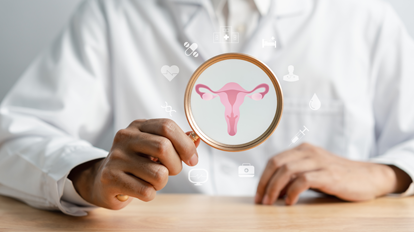
- The endometrium is another name for the uterine lining.
- One of the factors that can greatly determine whether a transfer is successful or not is the viability of the embryo, which needs to attach to the lining of the uterus, forming one step after the transfer.
- Doctors regularly examine endometrial thickness during the IVF process, and they generally do this by using a method called transvaginal ultrasound.
For someone who is going to start an IVF process, he or she has definitely come across words like ‘thin endometrium’, ‘endometrial lining’, or ‘triple-line endometrium’. Though the question remains: what does the thickness really mean? Is the same measurement ideal for all patients and the best one?
What Is Endometrial Thickness?
Ovarian hormones tightly regulate the development of the endometrium, or the lining of the uterus, during the menstrual cycle.
In an IVF or frozen embryo transfer cycle, the fertility specialist team checks and follows up on the patient’s endometrial status as a key factor in a successful embryo transfer. Their main purpose is to determine if the endometrium is at an appropriate pretransfer phase.
Doctors usually measure endometrial thickness in mm (millimeters) through a transvaginal ultrasound. Even then, endometrial thinness is only one aspect to look at in evaluating endometrial receptivity. The doctors can also take into account aspects like the patient’s history, levels of hormones, the state and texture of the endometrium, etc., to arrive at a better assessment of the situation.
What Is the Ideal Endometrial Thickness for IVF?
To obtain a reliable implantation, as well as a reliable prediction of the outcome of pregnancy in this case, one must rely on more than just one factor: endometrial thickness.
That is why many IVF practitioners will prefer to wait until the lining is at least 7mm and perhaps a little more before making the embryo transfer decision. Of course, you do run the risk of getting pregnant with a very thin lining; yet, the thickness by itself will never give a definitive prediction of an IVF result.
Besides just the thickness of the lining, doctors may include a look at the quality and characteristics of the endometrium in the assessment. During the right stage of the cycle, specialists may see the trilaminar or triple-line pattern on an ultrasound image as a beneficial sign.
It is also necessary to bear in mind that an ultrasound image or measurement is an assessment of fertility in one of its aspects only.
Why Is Endometrial Thickness Important in IVF?
Pregnancy by in vitro fertilization (IVF) involves the process of implantation, where the embryo attaches itself to the endometrium lining. So, the uterus should be adequately prepared to receive a transferred embryo.
Lots of research papers have shown that a very thin endometrium tends to result in a reduction of implantation and pregnancy rates. Yet, a certain level is necessary for pregnancy, and it’s only above that level that pregnancy is guaranteed to get pregnant.
Different doctors do not merely judge by one number whether an IVF pregnancy can occur or not. Rather, they take into account all the relevant factors before making a decision.
What Causes a Thin Endometrium?
There are different causes for a thinner endometrium. Some factors that could bring about this condition are:
- Uterine procedures or surgeries done previously.
- Scar tissue inside the womb.
- Uterine inflammation in the past.
- Insufficient blood supply to the uterus.
- Imbalances in hormones.
- Certain drugs.
- Previous radiation or therapies that affected the uterus.
- There could not be an obvious reason in some cases.
A patient who has had a uterine history might be a good candidate. In cases where the endometrium stays thin after suitable therapy, your reproductive specialist tends to suggest a more profound investigation
How Is Endometrial Thickness Checked During IVF?
With IVF therapy, the endometrium is one of the main areas to monitor, which is why we have transvaginal ultrasound at the patient’s disposal. Given what type of IVF cycle the patient is following, it may be the doctor who decides to follow up the endometrial lining at various milestones throughout the cycle.
We use transvaginal ultrasound in fresh IVF cycles to follow follicle growth and at the same time monitor endometrial development for comparison. Then again, it happens quite often when it comes to a frozen embryo transfer that the fertility team starts an embryo transfer program with the preparation of the female reproductive environment (i.e., the patient’s endometrium) either through a natural or modified natural cycle (where there is still some natural hormone production but the level is not very high) or through hormonal medications, depending mainly on the patient’s ovulation pattern and other health or clinical factors.
The main role of ultrasound in this step is two-fold: first, the doctor is able to look at the thickness and overall condition of the lining and the quality of the lining at different thickness levels; second, based on the appearance of the endometrium at different thicknesses. Only after such thorough assessment would the doctor decide that the womb is ready for the embryo transfer.
Can Endometrial Thickness Be Improved?
If the endometrium remains thin, the fertility specialist will want to find out why at first. Treatment is mainly focused on the basic cause rather than on the use of one treatment for each patient.
On different occasions, doctors may check hormone preparations, the uterine cavity, or look into the possibility of intrauterine adhesions.
There are also cases when some fertility clinics introduce additional methods for selected patients with endometrial thickness problems that don’t respond well to standard treatment. These include, for example, interventions that support the formation of the endometrium or enhance blood supply to the endometrium. But, as some of the treatments are only suggested by physicians and have no proven effectiveness on the birth rate, a patient must talk to their fertility specialist about the possibilities as well as the limits of each treatment proposal.
What is important here is that we have to check a thin lining on a personal basis because treating it with an individualized protocol rather than a universally applicable one is a far better approach.
Does a Thick Endometrium Always Mean Better IVF Results?
It might not be correct at all.
When it comes to the endometrium, thicker is not necessarily better. A healthy, receptive uterine lining is the real objective, not just going for the highest number in an ultrasound scan report.
Endometrial pattern, hormonal status, uterine status, and other individual patient factors may also play a role in implantation.
So, whether your lining is 8 mm, 9 mm, or any of the other possible values, you should always understand the number in the light of the overall IVF cycle that you’re undergoing.
Endometrial Thickness at Zemya IVF & Fertility Clinics
At Zemya IVF & Fertility Clinics, the staff keeps endometrial development under observation as part of the individualized IVF and egg freezing cycles planning and management. The staff of Zemya Fertility Clinic determines the endometrial lining by assessing ovarian function, hormonal changes, embryo development, medical status, and other pertinent clinical factors.
A thorough cause-and-effect examination of chronic endometritis of a thin type is possible, and they can propose a tailored therapeutic plan.
The clinic offers fertility treatments such as IVF, ICSI, embryo freezing, frozen embryo transfer, fertility preservation, and state-of-the-art reproductive laboratory services as well.
It is not a rule that a certain endometrial size at the time of embryo transfer guarantees implantation. A reproductive endocrinologist will be the one to help you understand the ultrasound image of endometrial thickness, your endometrium preparation, whether or not the embryo transfer is safe, etc.