A Challenging Fertility Journey with Endometriosis and Adenomyosis
Some couples, mainly those who have endometriosis and adenomyosis, end up having a lengthy emotional struggle over conceiving.
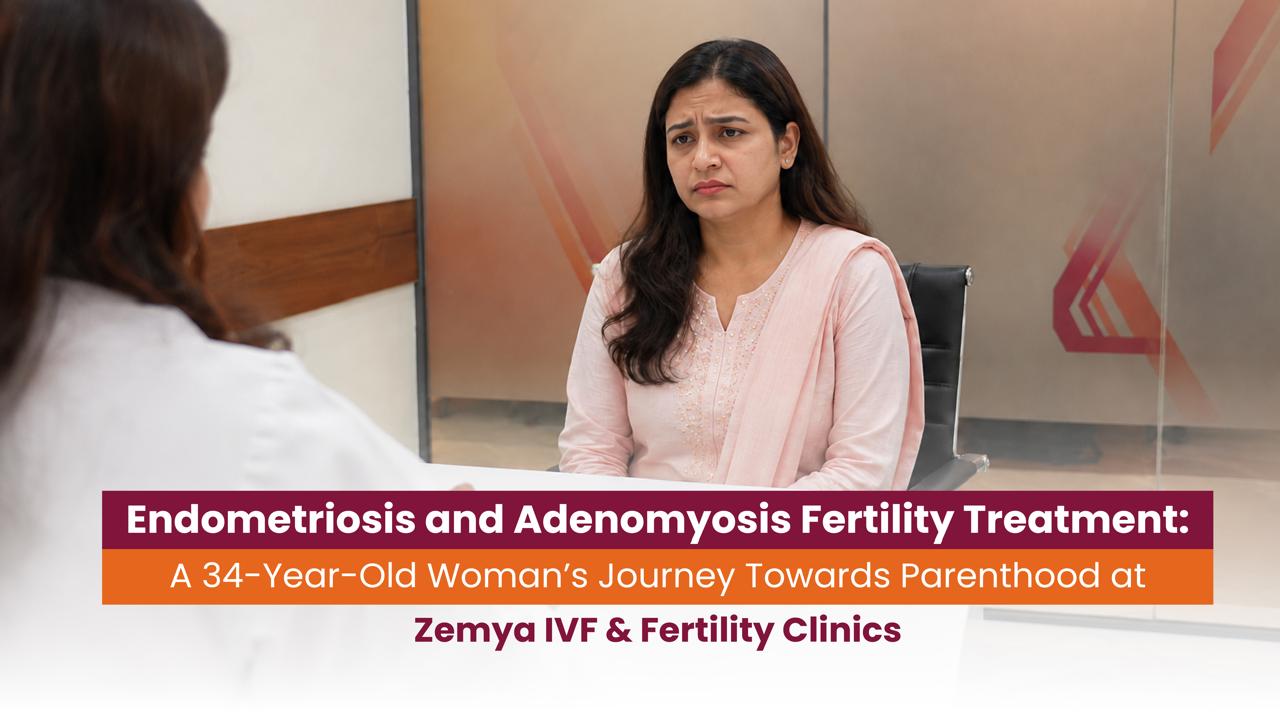
For example, a 34-year-old woman was diagnosed with a reproductive system disorder called endometriosis and adenomyosis after she had been trying for three years with her 36-year-old husband to conceive.
She had normal menstrual cycles but was quite painful during menses. She was diagnosed with endometriosis and adenomyosis, which may both lead to infertility.
So the fertility team at Zemya IVF & Fertility Clinics explained that they went to them to learn what went wrong with the pregnancy, even though they tried to get pregnant quite regularly.
Instead of doing conventional IVF as a first step, the fertility specialists on the team took time to assess the complete reproductive status of the couple; they also discussed how the woman’s reproductive diseases of the reproduction, endometriosis and adenomyosis, could influence the chances of getting pregnant.
Read More: Multiple Miscarriages: When to See a Fertility Specialist
Patient Profile
- Patient: 34-year-old female
- Partner: 36-year-old male
- Duration of infertility: 3 years
- Primary concern: Difficulty conceiving naturally
- Diagnosis: Endometriosis with adenomyosis
- Previous treatment: Medical management for pelvic pain
- Menstrual history: Regular but painful periods
- AMH: 1.4 ng/mL
- Antral Follicle Count: 9 follicles
- Semen analysis: Within normal parameters
- Tubal assessment: Bilateral tubes patent
- Uterine assessment: Features suggestive of adenomyosis
- Endometriosis: Moderate endometriosis with an ovarian endometrioma
- Treatment: IVF with ICSI followed by frozen embryo transfer
- Outcome: Clinical pregnancy following personalised fertility treatment
Understanding the Patient’s Diagnosis
The patient had had very painful menstruation for a few years. Her menstrual cycles were not only regular but also very light, though the strength of the pain she experienced made her decide to further consult a doctor.
Upon doing pelvic imaging, results were compatible with one of the most common benign disorders of the female reproductive system – adenomyosis- besides a cyst on the ovary caused by endometriosis, which is a condition characterized by the presence of endometrial glands and stroma on the pelvic tissues.
The investigation for the patient’s potential to have a child (fertility evaluation) resulted in:
- AMH: 1.4 ng/mL
- Number of antral follicles: 9
- Fallopian tubes: both were open and free
- Uterus: Signs consistent with adenomyosis
- Endometriosis: moderate endometriosis, including the involvement of an ovary
- Sperm examination of a partner: all parameters within the normal limits
The results of an investigation revealed that even though a woman still had enough eggs to carry out a fertility treatment, other important factors that had to be considered when working on a conception plan were her endometriosis and adenomyosis.
Why Endometriosis and Adenomyosis Matter
Endometriosis
A woman who contracts endometriosis will have a condition in which a tissue similar to the lining of the uterus grows outside the uterus. It mainly affects the ovaries, fallopian tubes, and other structures in the pelvis.
Depending on how severe it is, a person may experience painful, inflamed pelvic areas or difficulties getting pregnant, among other symptoms.
This patient had an endometrioma in the ovary and was experiencing endometriosis.
Adenomyosis
Adenomyosis is a disorder in which tissue like that from the lining of the uterus penetrates the wall of the uterus to reach the muscles.
A woman suffering from adenomyosis often has painful or heavy bleeding during menstrual periods, and the disease may change the uterine milieu.
With the co-existence of adenomyosis, an individual may need special attention to uterine condition and timing of an embryo transfer.
The Couple’s Search for Answers
The couple had thought that just having regular periods was a sign that there were no problems.
Still, cycles only tell part of the fertility story.
The fact is that you can get your periods regularly and yet suffer from ovarian, uterine or fallopian tube problems.
The team, that means, looked into several areas, including:
- Past medical and reproductive history
- Menstrual symptoms
- Oocyte reserve
- Potential ovarian response
- Endometriosis
- Uterine health
- Adenomyosis
- Tubal fertility
- Treatment experience
- Male fertility factor
The team could formulate the best treatment plan based on the couple’s fertility analysis.
Developing a Personalised Treatment Plan
Given that the patient had both endometriosis and adenomyosis, treatment was tailored to her particular case.
In the end, getting the eggs and putting the embryo in were not the only goals considered.
The medical team also evaluated the quality of the uterine lining and the best timing to do the transfer.
Before starting any treatment, they informed the couple about what options they have, what to expect for the response of their bodies, potential difficulties, and what aspects may affect their chances of success.
Evaluation findings led them to a suggestion that the couple go ahead with IVF accompanied by ICSI, which they would later freeze embryos for and schedule the transfer because of this.
Step 1: Ovarian Stimulation
The treatment was initiated by controlling the ovarian stimulation to encourage the development of multiple mature follicles within the patient’s ovaries.
The patient’s response was controlled via ultrasound examinations and hormonal tests during this phase of treatment.
The major purpose of stimulating her was to get the right number of mature oocytes, but at the same time the treatment has to be done carefully in a way suitable for her ovarian reserve and medical history.
Step 2: Egg Retrieval
Follicles were considered to be of good size for harvesting when the doctor carried out the egg collection procedure.
Out of 10 retrieved oocytes, 8 were mature.
The retrieved eggs were immediately processed in an IVF laboratory.
Step 3: ICSI and Fertilisation
The couple was receiving assisted reproductive treatment; so, the use of ICSI for fertilisation was justified.
For ICSI, a selected sperm is gently injected into a ripe egg.
In all, 7 out of the 8 collected mature eggs were fertile after ICSI.
The produced embryos were then incubated and closely observed in the IVF lab.
Step 4: Embryo Development
Day by day, the progress of the embryos was observed.
Finally, at the blastocyst stage, they had three good-quality blastocysts ready for cryopreservation.
Owing to the patient’s adenomyosis condition, the team felt against proceeding directly towards a fresh embryo transfer.
Because of this, the embryos were kept frozen while the patient’s uterine environment was brought under control.
Step 5: Preparing the Uterus
A receptive uterus is key to successful implantation.
The patient had adenomyosis, so the fertility doctors reviewed the uterus condition before embryo transfer
Medicine for the patient’s adenomyosis and other related conditions to the were prescribed so that, before freezing the embryo transfer, they would have the best possible uterine condition.
With an optimistic medical view, it was decided to proceed with the embryo transfer after checking the endometrial lining depth.
Step 6: The Embryo Thawing
A single good-quality blastocyst was picked out on day five or six.
During the embryo transfer procedure, the doctor monitored the position of the embryo by the use of ultrasound.
Since the patient was having the first fresh cycle and had a good ovarian response, we made sure to transfer a single blastocyst so that the main goal for the couple a healthy baby with a single-child pregnancy is reached.
Step 7: Pregnancy Confirmation
Post embryo transfer, the patient had a serum beta-hCG test done.
An increase in the serum beta-human chorionic gonadotropin (hCG) levels suggests the woman’s pregnancy.
A pregnancy was confirmed when the hCG level returned a positive pregnancy result. An ultrasound also showed an intrauterine pregnancy
She carried the pregnancy to term under a specialist’s care.
The Outcome
Through three years of infertility, the couple was able to get pregnant after fertility treatment tailored to their individual needs and conditions.
The case underscores that fertility treatment for women with endometriosis and adenomyosis may need a multidisciplinary approach as it takes into
For this patient, the treatment strategy involved:
Endometriosis + Adenomyosis → Detailed fertility evaluation → IVF with ICSI → Embryo development → Freezing → Uterine preparation → Frozen embryo transfer → Clinical pregnancy
Why Personalised Treatment Was Important
This case also highlights why fertility treatment cannot always follow a standard protocol.
A normal menstrual cycle is usually one of the indicators that a woman is fertile.
Yet, that is not the only factor that can predict the ability to get and stay pregnant – it may sometimes give a completely wrong impression.
The investigations of this patient showed:
In making the treatment plan, each factor played a role.
This way, the group of specialists did not look exclusively at just one aspect of fertility, but they took everything into account: the condition of the woman’s ovaries and uterus, endometriosis as well as adenomyosis on both sides of reproduction – the woman and the man!
Our medical consultants have reviewed this article and confirmed its accuracy and validity.
The Role of the IVF Laboratory
The IVF lab had an essential role during the treatment process.
In the laboratory, oocytes that were recovered after the egg retrieval procedure were subjected to ICSI then embryo development was tracked.
The embryos were grown in a controlled lab environment up to the blastocyst stage.
Then, the blastocysts formed after culture were frozen for possible transfer to the patient in the future.
The teamwork between infertility experts and the embryologists enabled the treatment plan to stay under the control of a single specialist throughout stimulation of the ovaries till the embryo transfer.
From Diagnosis to Parenthood
Endometriosis was diagnosed first, and the couple was shocked and disheartened by it.
It really put a stop to all their hopes and dreams of being a family.
But then the couple was given the chance through the endometriosis diagnosis, which gave them the chance to get to know the root issue.
Knowing the factors that were causing infertility gave couples the chance to get the right treatments.
A couple who underwent individually adapted IVF and a transfer of frozen embryos managed to have a clinical pregnancy.
From the couple’s experience, infertility caused by having endometriosis and adenomyosis is a fact of life, and the fact is not that if you have infertility, it means that you are not able to get pregnant automatically. These two disorders will probably cause complications in conception but will not be the reason why pregnancy can’t happen at all, in the case that someone has one of them or even both.
There is no single story, a single experience in infertility. Fertility treatment should take into account the patient’s medical history, test results, and his or her goals of reproduction.
At Zemya IVF & Fertility Clinics, the goal is to provide individualised fertility care based on each patient’s unique medical and reproductive needs.
Call: +91 84 7500 7500 | +91 9297 85 85 85
Website: www.zemyaivf.com