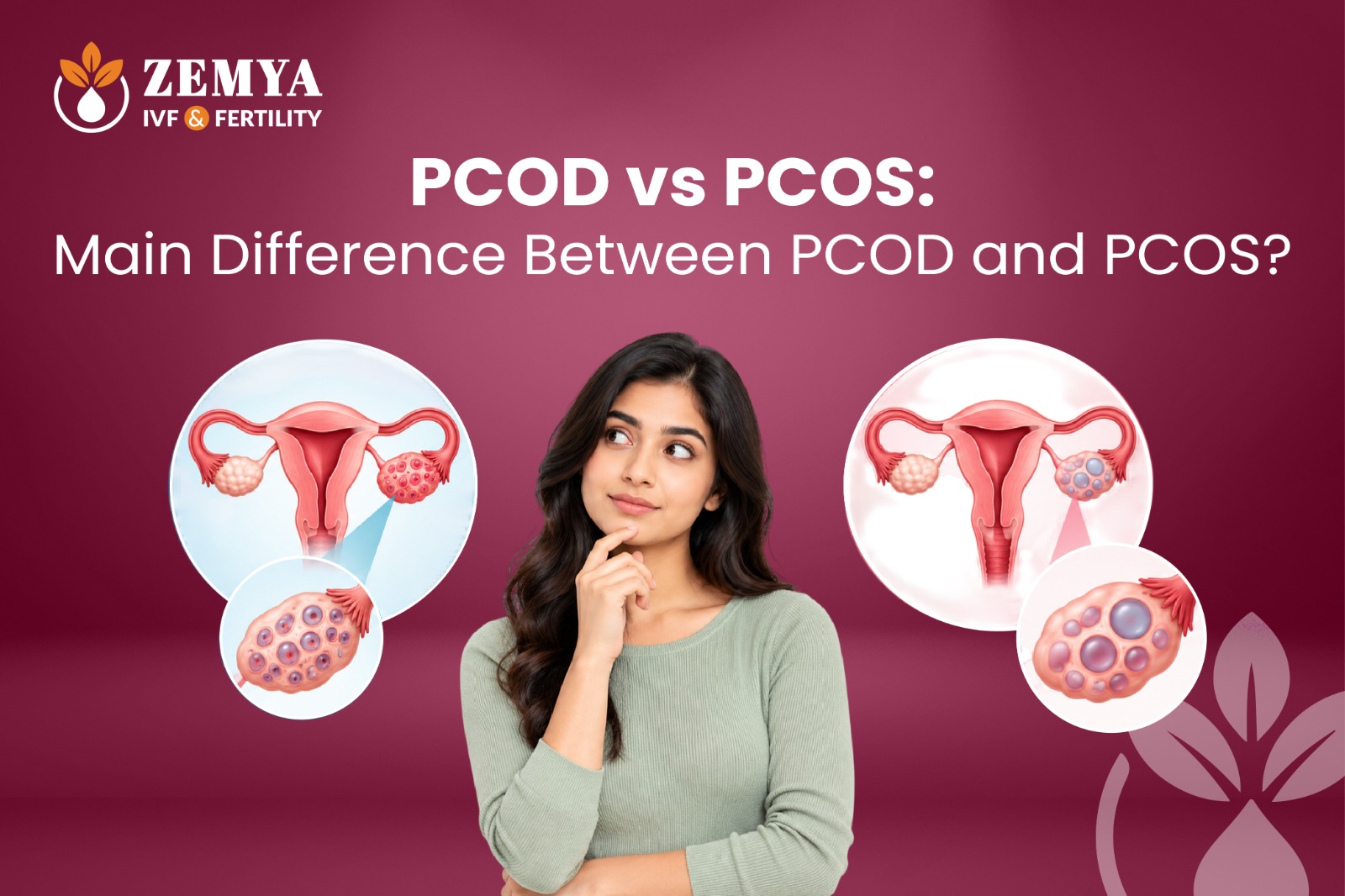
- When women experience problems with their periods and a hormonal imbalance, you hear two things related to it: PCOD and PCOS (now known as polyendocrine metabolic ovarian syndrome (PMOS)). More often than not, people use the two interchangeably. But are PCOD and PCOS different from each other?
- PCOD vs PCOS key differences: You can easily differentiate PCOD from PCOS, as PCOD is a condition in which cysts enlarge the ovaries.
- PCOS is a hormonal disorder that can cause other diseases, impacting overall health.
- Understanding the key differences between PCOD and PCOS helps women identify the symptoms, diagnose themselves, and find suitable medical treatments. Discover how these terms are used, their symptoms, causes, proper diagnosis, and treatment options.
What Is PCOD?
Doctors use the term polycystic ovarian disease, or PCOD for short, to describe ovaries with potentially multiple immature or partially matured follicles that may not necessarily release eggs regularly.
Common PCOD syndrome symptoms in women: some women with PCOS experience multiple health problems, while some have only a few. These include: irregular or no periods, weight gain, acne, and un-hair growth.
Recognising that PCOD is not a clear-cut diagnosis in patients with PCOS vs. PCOD. PCOD is not an accepted standalone medical diagnosis from PCOS. A doctor should evaluate the symptoms and identify the diagnosis of either polycystic ovary syndrome or an alternative hormonal disorder.
What Is PCOS?
PCOS, or polycystic ovary syndrome, is a hormonal and metabolic disorder that happens to women during their reproductive years. PCOS involves some combination of these problems: changes in hormone levels, presence of male hormones (androgens), irregular (or no) ovulation, and sometimes, the presence of cysts on the ovaries (seen by ultrasound).
Symptoms of PCOS include irregular periods, excess hair growth or balding, acne, weight gain, and difficulty conceiving.
Another common health problem linked to PCOS is insulin resistance, a condition that can also cause sugar levels in your blood to become high and put you at risk of type 2 diabetes and other metabolic illnesses.
What are the Symptoms of polycystic ovary syndrome? The classic signs that doctors and researchers have said to look for include these: ovarian cysts: PCOS is marked by the development of lots of small cysts in the ovaries.
PCOD vs PCOS: Key Differences at a Glance
Although people often use PCOD and PCOS interchangeably, medical professionals recognize PCOS as the established diagnosis. The following table explains how experts commonly understand the terms.
| Feature | PCOD | PCOS |
|---|---|---|
| Full form | Polycystic ovarian disease | Polycystic ovary syndrome |
| Medical status | Commonly used term, not a separate standard diagnosis | Recognised hormonal and metabolic syndrome |
| Hormonal changes | May involve hormonal imbalance | Often involves elevated androgens |
| Ovulation | May be irregular | Ovulation may be irregular or absent |
| Insulin resistance | May be present | Common metabolic feature |
| Menstrual cycle | Irregular periods may occur | Irregular or absent periods may occur |
| Fertility | May affect ovulation | May cause difficulty conceiving |
| Long-term health | Depends on underlying condition | Associated with metabolic and reproductive health risks |
| Treatment | Depends on diagnosis and symptoms | Individualised medical treatment and lifestyle management |
The key takeaway: PCOD and PCOS are not two clearly separate diseases with completely different symptoms. PCOS is the recognised diagnosis, and PCOD is a commonly used alternative term.
Common Symptoms of PCOD and PCOS
Symptoms of PCOD and PCOS can be quite similar. How these symptoms may differ in different women.
Common symptoms include:
- Heavy periods: Menstruation courses might become erratic, with lengthy gaps between intervals, or it might be simply a couple of intervals in a year.
- Weight gain: weight gain or challenges in maintaining weight.
- Hair growth on face, chin, chest, and abdomen: hair growth in areas where women don’t have hair due to the effect of male hormones.
- Oily skin and acne: Higher-than-normal levels of hormones can cause excess oil production, which leads to acne.
- Hair thinning: A number of women may have male pattern thinning or balding of the scalp hair.
- Trouble with conception: Irregular ovulation may result in unpredictable fertile days, reducing the chances of conception.
- Insulin resistance: your body may not respond normally to insulin, a hormone that helps the body control blood sugar.
Not all symptoms will be present in every woman. Some women with PCOS will not have increased hair growth or regular periods.
What Causes PCOD and PCOS?
The exact cause of this disease isn’t known, but here are some factors that are known to play a role.
1. Hormonal imbalance
Elevated androgens (“male” hormones) can disrupt normal ovulation and cause acne, unwanted hair growth and loss of hair.
2. Insulin resistance
Insulin helps control sugar levels in the blood. When the body resists insulin, it produces more insulin, which can then cause the body to make more androgens and also impact ovulation.
3. Genetic factors
Having a family history of PCOS, type 2 diabetes, or related hormonal disorders may put you at a greater risk of PCOS.
4. Lifestyle factors
Lack of exercise, poor nutrition, and body changes may affect your metabolism and make some symptoms worse. But you can have PCOS, even if you are not obese.
How Are PCOD and PCOS Diagnosed?
It is necessary to make the right diagnosis, as irregular cycles, weight gain, and increased hair growth may also be a sign of other diseases.
For adults, the criteria used for diagnosis are the presence of at least two of what comes next three features, following the exclusion of other possibilities:
- Clinical or blood-test evidence of excessive androgens, e.g., excess body or facial hair; high levels of the hormone testosterone.
- Irregular, infrequent, or absent ovulation, often leading to irregular, infrequent, or absent menstrual cycles.
- Polycystic ovarian appearance on ultrasound (or, in adults, an AMH level, if tested) as an alternative.
Your doctor may recommend:
- Blood tests: To check levels of hormones like testosterone, as well as other hormonal disorders.
- Blood sugar test: To evaluate metabolic health and indicate a higher probability of diabetes.
- Ultrasound: To evaluate the ovaries and take a look at their appearance.
- Medical history and examination of menstrual pattern symptoms, family history, and reproductive health.
PCOS does not always require ultrasound for diagnosis. Diagnosis of PCOS in teens is different and more stringent.
PCOD vs PCOS Treatment: What Are the Options?
No single treatment may be appropriate for all women. The treatment for PCOS will vary per the woman’s individual symptoms, metabolic health, her age, and whether she is planning to get pregnant.
Common treatment approaches include:
1. Lifestyle changes
Managing PCOS with a healthy lifestyle can be very helpful in managing your PCOS. Your healthcare professional may advise:
- After you have followed a healthy and well-balanced diet.
- Participating in exercise on a regular basis.
- Having a good sleep habit.
- Emphasizing the importance of weight loss.
- Steer clear of diets that are very limited and rapid weight-loss techniques.
There is no single PCOD diet chart or specific diet that works for everyone. Healthy eating should be personalised to individual nutritional needs.
2. Medical treatment
Based on symptoms, doctors may recommend:
- Oral contraceptives: Contraceptive pills or pills to regulate menstrual cycles and symptoms related to androgens.
- Treat with Metformin in specific women that had features of metabolic health syndrome and insulin resistance.
- Additional drugs for excess body hair or pimples.
- Hormonal therapy to protect the endometrial (uterine) lining when periods are infrequent.
- Pregnancy planning for women is also a different treatment.
3. Fertility treatments
Women with ovulation problems who have trouble conceiving may be candidates for fertility treatment. Ovulation-inducing medications are typically used as a first-line treatment. Based on the diagnosis, IUI or IVF may be another treatment option.
A fertility specialist can evaluate the health of your ovaries, other reproductive factors, and which treatments are right for you.
Can PCOS Cause Long-Term Health Problems?
PCOS is about more than just your period and fertility. Left untreated, having PCOS can put you at greater risk for what comes next conditions:
- Type 2 diabetes and Blood Sugar Dysregulation
- Hypertension and other cardiovascular risk factors.
- Impact on metabolic health.
- Endometrial hyperplasia and endometrial cancer in cases where periods are irregular and the uterine lining is not regularly shed.
- Diabetes and other pregnancy complications.
- Obstructive sleep apnea.
- Anxiety, depression, and other mental health issues.
- In some cases, Ovarian cancer
Having PCOS does not mean a woman will develop these conditions. Routine health checks and suitable treatment can help to control the risks for the individual. The overall risk of endometrial cancer is low.
When Should You Consult a Fertility Specialist?
Visit a gynaecologist or a fertility specialist if you experience prolonged irregular menstrual cycles, excess body hair, unexplained weight changes, or are unable to conceive.
Conceiving with PCOS: Some women may conceive naturally. Some women need assistance to manage their ovulation. Early assessment may help to uncover other health issues and give you a treatment plan.
Conclusion
Knowing the difference between PCOD and PCOS is important for making an appropriate decision about hormonal and reproductive health.
For the same symptoms, hormonal and metabolic imbalances cause the recognised syndrome PCOS; on the other hand, doctors commonly use PCOD as a diagnosis.
In many cases, a correct diagnosis enables you to control the symptoms, minimise health risks to your metabolism, and improve your chances of conceiving with lifestyle modifications and adequate medical intervention. If you have symptoms, you must seek early medical consultation.