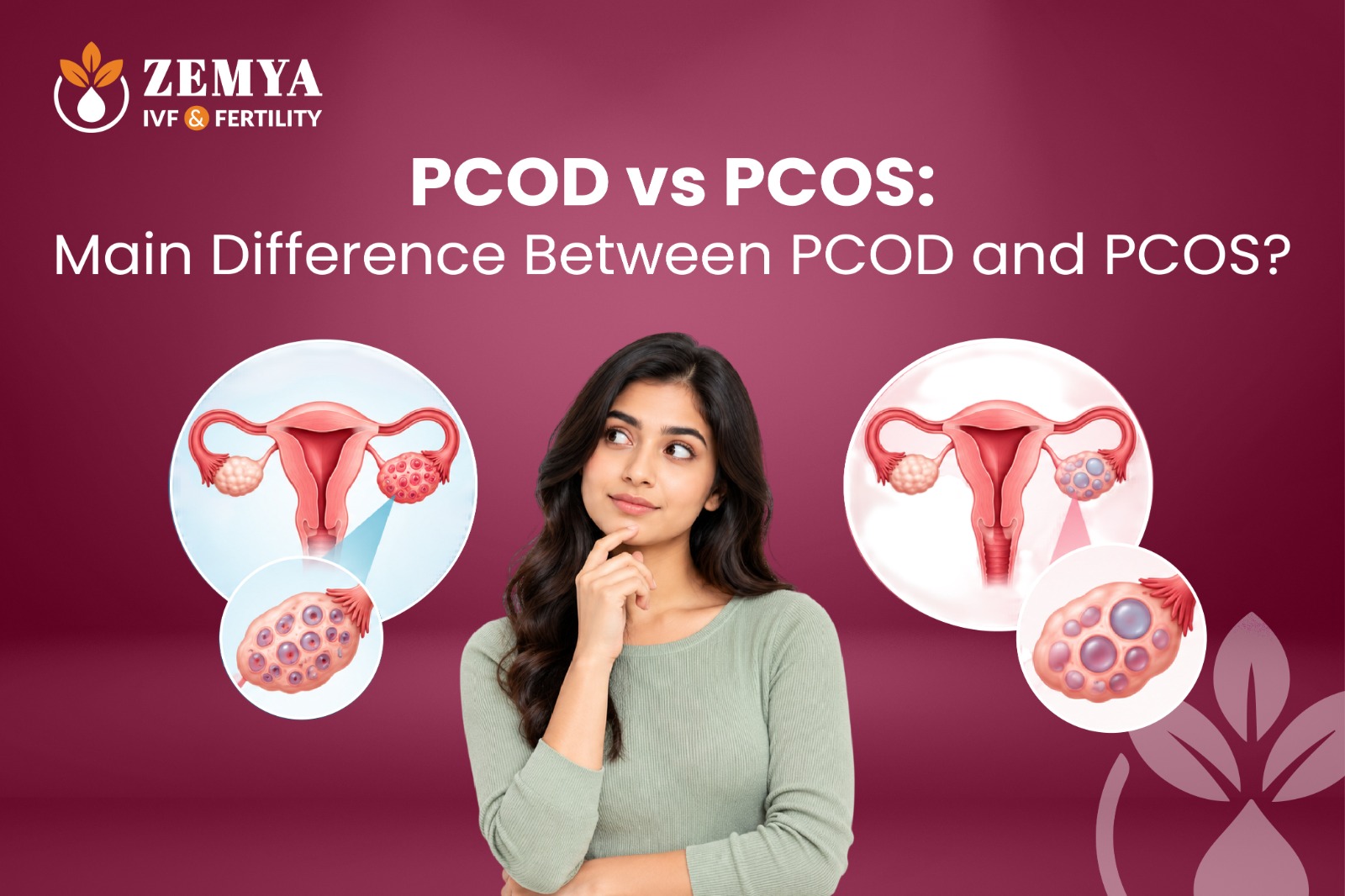
- PCOD and PCOS are two terms that are often used to mean the same thing, but they are actually a bit different.
- Lots of women who have irregular periods, gain weight, get acne, develop hair in unwanted places, or have trouble conceiving ask one big question: what exactly is the difference between PCOD and PCOS?
Both diseases involve hormonal and ovarian changes and can cause issues for women of childbearing age. Then again, PCOD, or Polycystic Ovarian Disease, and PCOS, or Polycystic Ovary Syndrome, are words that are generally used to refer to different symptom patterns and hormonal variations.
Knowing the difference between PCOD and PCOS is essential so that women can identify their problems and get the right medical help.
What Is PCOD?
Polycystic Ovarian Disease (PCOD) is the acronym for the medical condition in which the ovaries produce immature or partially developed follicles that may accumulate over time. These follicles are commonly diagnosed through ultrasounds that show multiple small fluid-filled structures in the ovaries. But importantly, the mere presence of polycystic ovaries on the ultrasound does not mean that a woman suffers from PCOS.
Symptoms linked to women labeled as PCOD are described as:
- Menstrual irregularities
- Acne
- Weight gain
- Difficulties in weight management
- Ovulation variations
- Some cases may have difficulty conceiving.
Symptoms’ intensity varies largely. Some women may have almost no symptoms, and their menstrual cycles may be regular. Still, others may have severe reproductive issues.
What Is PCOS?
PCOS is an abbreviation for Polycystic Ovary Syndrome. It is a multifaceted hormonal and metabolic disorder that may interfere with ovulation, menstrual cycles, and reproductive health in general.
Women with PCOS may encounter what comes next symptoms:
- Spotty or missing periods
- Infrequent ovulation
- Trouble getting pregnant
- Too much hair on face or body
- Pimples
- Hair fall
- Getting bigger
- Insulin resistance
- Higher levels of male hormones
PCOS is more than just a problem with the ovaries. It can also lead to changes in a woman’s metabolism and hormone balance, which explains why doctors call it a syndrome.
A crucial fact is that a woman can suffer from PCOS even without having clear polycystic ovaries as shown by an ultrasound.
PCOD and PCOS Main Difference
The main difference between PCOD and PCOS is usually explained in terms of the general characteristics of the condition.
PCOD is often referred to as a general term for ovarian alterations with multiple follicles not maturing and menstrual disorders.
PCOS, on the contrary, is an officially identified syndrome that includes a mixture of problems with ovulation, excess of male hormones, and the presence of polycystic ovaries in some women.
So, besides the ovary issues, PCOS can also lead to changes in metabolism and insulin performance.
PCOD vs PCOS: A Simple Comparison
| Feature | PCOD | PCOS |
| Full form | Polycystic Ovarian Disease | Polycystic Ovary Syndrome |
| Main concern | Ovarian and ovulation-related changes | Hormonal and metabolic syndrome |
| Hormonal imbalance | May be present | Common |
| Irregular periods | Can occur | Common |
| Irregular ovulation | Can occur | Common |
| Increased androgens | May or may not be present | Often present |
| Insulin resistance | Less central | Common in many women |
| Weight gain | Can occur | Can occur |
| Difficulty conceiving | Possible | Possible |
| Metabolic concerns | May be less prominent | Can be more significant |
Is PCOS More Serious Than PCOD?
Some women want to know if PCOS is a bigger problem compared with PCOD.
PCOS might need more careful monitoring as it potentially affects not only reproductive health but also metabolic health. Besides ovulation problems, insulin resistance and metabolic complications could be risk factors for some women with PCOS.
Even so, not all women who have PCOS will face major health issues.
Similarly, mild PCOD symptoms shouldn’t be neglected. Highly irregular periods, hair growth in unusual places, acne, and inability to conceive should be checked.
The emphasis should not be on “which is worse” but on recognizing the person’s signs and health requirements.
What Causes PCOD and PCOS?
The precise reasons for PCOD and PCOS are highly complicated and may result from several areas.
Major areas of contribution could be:
- Heredity
- Imbalance of hormones
- Resistance to insulin
- Raised male hormone levels
- Metabolic changes
- Hereditary factors
- Lifestyle and environmental factors
Eating one unhealthy meal or having a stressful week is not the cause of PCOS. Same thing, having PCOD or PCOS is not the result of a woman doing something wrong.
Symptoms of PCOD and PCOS
The symptoms of PCOS and PCOD are very similar. The most noticeable symptoms are irregular periods, breakouts, and problems with the release of eggs.
Signs that suggest a high level of male hormones include:
- Hair growth on the face more than usual
- Hair growth all over the body
- Lots of breakouts
- Hair loss
Changes in weight and difficulty in losing weight are other things that are usually experienced by the ladies.
But symptoms by themselves are not a big enough indicator of the disease. Other health problems may also cause irregular periods or changes in hormones.
PCOD vs PCOS and Pregnancy
The fertility of a woman can be impacted by both PCOD and PCOS, as regular ovulation is a key factor in natural conception.
Lack of regular ovulation can make it harder to identify the fertile window and get pregnant naturally.
Still, having PCOD or PCOS does not imply that a woman will not be able to have a baby.
Some women get pregnant naturally, whereas others might need treatment to stimulate ovulation or deal with other fertility factors.
Based on the individual condition, treatment can be:
- Lifestyle and weight control
- Use of medicines
- Stimulation of ovulation
- Intrauterine insemination, or IUI
- IVF treatment.
- Male partner evaluation is also an important part of fertility test as infertility can be due to male, female, or both factors.
How Are PCOD and PCOS Diagnosed?
Before diagnosing PCOS or looking for the underlying causes of the symptoms connected to PCOD, a doctor may be required to consider some other aspects as well.
The assessment procedure might consist of:
- A detailed menstrual history
- A case of hyperandrogenism
- Hormonal blood panels
- Pelvic ultrasound
- Weight and metabolic profiling
- Blood sugar assessment, if relevant
- Personal and family medical history
For PCOS, physicians tend to rely on standardized diagnostic criteria and might also eliminate other disorders capable of causing similar symptoms.
In fact, an ultrasound by itself is insufficient for diagnosing every PCOS patient.
Can Lifestyle Changes Help?
Making lifestyle changes can be significant in controlling symptoms, mainly when insulin resistance or weight issues exist.
Eating healthily, exercising regularly, sleeping well, and dealing with stress efficiently are some of the good habits that keep the human body fit.
Women with insulin resistance who enhance their metabolic health could experience improved regulation of blood sugar levels.
Still, replacing medical check-ups with lifestyle changes is a no-no, most of all when menstrual cycles remain irregular for a long time or conception is not happening.
When Should You See a Fertility Specialist?
Women with PCOD or PCOS attempting to conceive these women may be helped by fertility advice if they have irregular cycles or are concerned about ovulation. A fertility evaluation can assess hormone levels, ovarian function, ovulation, and potentially other factors.
Women with PCOD and PCOS, as well as fertility issues, can be given an individualised fertility assessment at the Zemya IVF & Fertility Clinics.
Given one’s age, record of menstruation, ovulation, ovarian function, metabolic health, and other fertility factors, treatment may vary. Our goal is not to automatically send all patients towards IVF.
Some women may do well with a more straightforward approach, whereas others with added problems of fertility may need more aggressive treatment
The Bottom Line: PCOD vs PCOS
The key distinction between PCOD and PCOS lies in the fact that, in reality, PCOS is typically regarded as a widespread hormonal and metabolic disorder that is marked by ovulatory dysfunction and changes due to androgens, while PCOD is more of a colloquial term to describe ovarian and menstrual abnormalities.
Both these disorders are capable of impacting menstruation, ovulation, and fertility; yet, the manifestations and their intensities depend on the individual cases.
If you are experiencing irregular periods, acne, excessive hair growth, sudden weight changes, or difficulty in conceiving, getting a thorough medical check-up done is the most advisable step rather than trying to self-diagnose based on symptoms or an ultrasound alone.
Knowing the specifics of your hormonal and reproductive functioning will enable you to make a wise decision in improving your health and, if you want, embarking on the path of pregnancy.