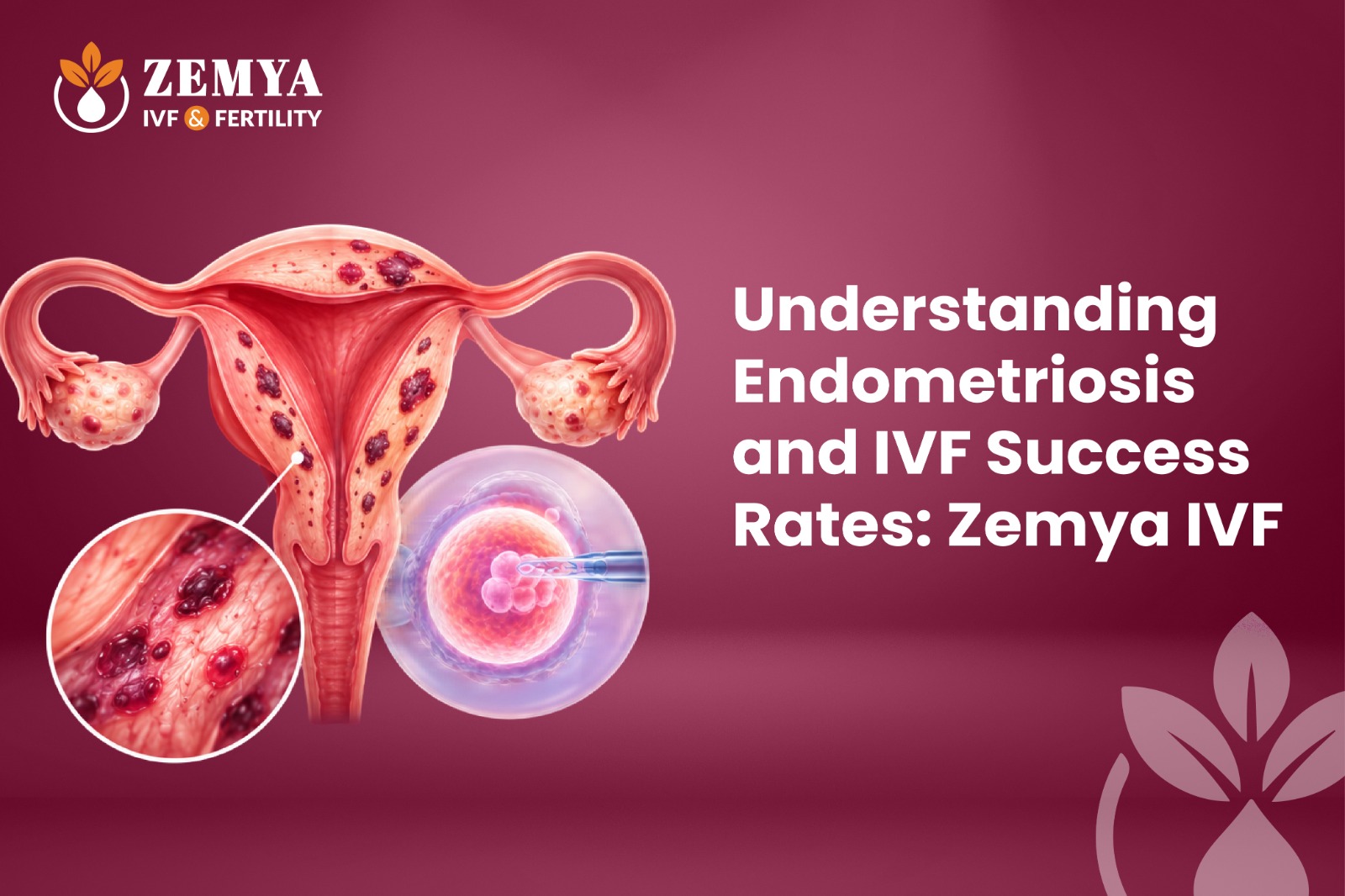
Endometriosis is not just rare; it represents one of the most frequently encountered gynecological conditions. However, it remains an enigma even for those well-informed in the medical field. About 10% of women of reproductive age in the world have got this condition. It’s an insidious kind of abnormal growth of cells at the lining of the uterus, but has grown outside the uterus. It is a painful condition. It is often leads to long-term scarring and disruption at the organ level in the vicinity of the affected area. Since it is a chronic one, recurring pelvic pain is part of it. To the couple or woman who is trying to have a child, a diagnosis of such a disorder would bring forth the heavy emotions of concern. It also causes fear about the possible loss of their ability or even the chance to have children later on.
Does endometriosis impact IVF success? Does having endometriosis will impact the chances of getting through IVF successfully? Researchers have identified a complicated yet very promising relationship between endometriosis and IVF success rates. Endometriosis will pose very clear biological barriers. However, reproductive scientists nowadays are developing highly sophisticated and targeted laboratory and in-patient strategies to overcome these challenges.
At Zemya IVF & Fertility Clinics, acclaimed as the Best IVF centre in Delhi, we never allow your diagnosis to define your journey. With the latest technology in diagnostics and customized treatment options, our experts help you in endometriosis and IVF.
How Endometriosis Impacts the Reproductive Ecosystem
To comprehend how the individualized treatment regimen is developed, there is an initial need for understanding how endometriosis affects the natural cycle of conception:
The Egg Quality and Ovarian Reserve: In the case of endometriosis, there can be the development of chronic pelvic inflammation. It would have a negative impact on the microenvironment in which eggs mature. In addition to this, in the case where endometriosis develops into ovarian cysts (called endometriomas), there could be compression or injury to the normal ovarian tissue.
Adhesions and scar tissue can distort the normal anatomy of the pelvis, block the tubes, and thus prevent the natural encounter of the egg and the sperm. That is the reason why pregnancy outcomes endometriosis vs tubal factor IVF assessments show great similarity, because IVF completely ignores the pelvic cavity to perform the fertilization process within a laboratory incubator.
Implantation Problems: Endometriosis is usually connected with progesterone resistance. It implies that despite the creation of high-quality embryos, the endometrial receptivity might not be optimal, resulting in silent endometriosis and IVF failure.
Success Rates by Stage and Severity
The severity of a particular disease really determines how damaging it is, and in this case, doctors divide severity into four clinical categories from the mildest (Stage 1) up to the most severe (Stage 4).
Changes of mild and severe illness
Women living with endometriosis at an early Stage 1/Stage 2 are still likely to achieve the same IVF success rates as women with completely normal fallopian tube situations or those whose infertility is totally unexplained.
Doctors face the biggest medical challenge with patients suffering from stage 3 endometriosis, IVF success rates or IVF success rates with severe endometriosis. Such patients typically have a big ovarian cyst, called a “chocolate” cyst, which fills with thick blood.
Even though the presence of that makes the egg retrieval through surgery a bit tricky, having severe disease does not mean getting pregnant through IVF is not possible. In fact, IVF success for stage 4 endometriosis is very common nowadays because with surgery and medicine used to suppress the hormone that controls endometriosis growth, one can eliminate the disease temporarily in most cases before implanting an embryo.
Advanced Protocols: How to Improve IVF Success with Endometriosis
In case you are suffering from pelvic disease, joining an ordinary IVF treatment is not very successful. In Zemya IVF & Fertility Clinics, we have highly customized endometriosis IVF protocol success templates that help avoid inflammation and increase the uterine receptivity.
Inflammation Suppression (Down-Regulation):1 to 3 Months.
We usually employ a special downregulation endometriosis IVF success plan with GnRH agonists. We put your ovaries into a temporary rest state with the use of GnRH agonists (Lupron), and thus deprive the endometriosis lesions of estrogen. As a result, there will be little inflammation before the embryo transfer.
Ovarian Stimulation Optimization:10 to 12 Days.
We develop an IVF protocol for severe endometriosis through the combination of low-dose and high-purity gonadotropins and oral anti-inflammatory or aromatase inhibitors to protect your follicles from toxins in the pelvic environment
Embryo Banking and Vitrification: Lab Phase.
They freeze the generated blastocysts using vitrification instead of carrying out a fresh embryo transfer immediately. This gives the patient’s reproductive organs time to recuperate from the stress brought about by the retrieval process.
Preparing the Receptive Lining: Transfer Phase.
Researchers prepare the lining under a very strict hormone control protocol. Using a Frozen Embryo Transfer Success Rate for Endometriosis increases the probability of success because doctors will transfer the embryos to a hormonally receptive uterus.
Surgical Intervention: To Operate or Not?
Patients often raise the question in their minds. It is unclear whether to go through the laparoscopy to assess the success rates of IVF. In the past, doctors almost immediately went for surgery to remove endometriosis.
In contrast, today’s trend of endometrioma IVF success rates suggests that one should not act in haste. Especially if a lesion is a cystic one (endometrioma), which surgeons can surgically remove, as they can accidentally affect the healthy ovarian tissue surrounding the cysts and lead to a rapid decline in the egg reserve that the woman still has.
The Modern Guideline says that most times an operation will be a last resort or at least a very late one for the patient who cannot cope with the pelvic pain caused by endometriosis, or when the ovarian tumor is so big that it creates an obstacle which prevents the surgeon from safely reaching the follicles (egg sacs) at the time of retrieving the eggs. Other than that, moving directly from diagnostic tests to IVF cycles without intervening procedures, and because of this, maintaining one’s egg reserve becomes the most effective way.
Age-Related Expectations
Maternal age remains one of the most influential factors in fertility treatments, just as in any of them. When comparing endometriosis and IVF success rates by age groups, younger women (less than 35) are still in a great position to have successful outcomes. That is because, in reality, their egg quality at baseline, which remains high enough, still allows for a successful pregnancy even in the presence of the inflammatory stresses that the disease causes. Doctors strongly advise patients who are 37 and older to pair specialized ovarian stimulation regimens with Preimplantation Genetic Testing for aneuploidy (PGT-A) so that they can identify and choose the embryos that are chromosomally normal and of the best quality.
Diagnosis does not determine your fate. Are you prepared to reclaim control of your journey towards fertility? Look for one of the best IVF Hospitals near me. Visit Zemya IVF & Fertility Clinics – the Best IVF center in Delhi.