- Ovulation tracking with the help of an ovulation kit, measuring basal body temperature, checking cervical mucus, and using ovulation apps can lead to significantly better timing for natural fertilization.
- A positive ovulation test reveals the detection of the LH surge, but it does not confirm the release of the egg or guarantee conception.
- Ovulation predictor kits can give false positive results in women with PCOS or high levels of luteinizing hormone.
- Women with irregular menstrual cycles should consider fertility assessment at the earliest instead of solely depending on the ovulation tracking tools.
- In case of not obtaining a positive ovulation test result after several months of testing, a professional consultation is of great importance.
- A fertility doctor provides ultrasound scanning, blood tests for hormone levels, and treatments based on clinical evidence, which are not achievable through home testing tools.
One of the most liberating things a woman can do when trying to conceive is to understand the natural rhythms of her body. It has become very easy and convenient to track ovulation. Women today have several avenues for receiving help and information about ovulation prediction, including ovulation predictor kits, ovulation apps, basal body temperature charting, and cervical mucus observation. A lot of women have found these tools very helpful in spotting their fertile time, which leads to pregnancy.
However, the key point here is that you cannot solely depend on ovulation for conception, as it does not guarantee accurate results. It is more important to understand when to stop trying on your own and when to seek professional help rather than waiting for months for nothing.
Zemya IVF & Fertility Clinics, the best IVF Treatment in Delhi, is a fertility centre that provides a complete guide to couples in transitioning from simple self-monitoring to complex medical treatments.
What Is Ovulation Tracking?
Ovulation is the phase in a female’s menstrual cycle where an egg is released from the ovary and is ready to be fertilized. This usually happens around the middle of the menstrual cycle, although the actual day of ovulation can differ considerably from one woman to another and even from one cycle to another in the same woman. Since sperm can live inside the female body for as long as five days, while the egg can live for only twelve to twenty-four hours after it is released, it is essential to pinpoint the fertile window, or the most fertile point in the cycle, to maximize the possibility of conception.
Ovulation tracking is the term used for the techniques employed to predict ovulation time (expected date) so that sexual intercourse or fertility treatment can be planned accordingly. When properly used, these ovulation tests can significantly enhance the woman’s chances of getting pregnant naturally.
Common Ovulation Tracking Methods
Ovulation Predictor Kits
An ovulation test kit is one of the most frequently used and dependable devices for home ovulation prediction. Ovulation predictor kits signal the LH surge, a sudden increase in luteinizing hormone, which is the body’s way of preparing for ovulation about twenty-four to thirty-six hours before a mature egg is released.
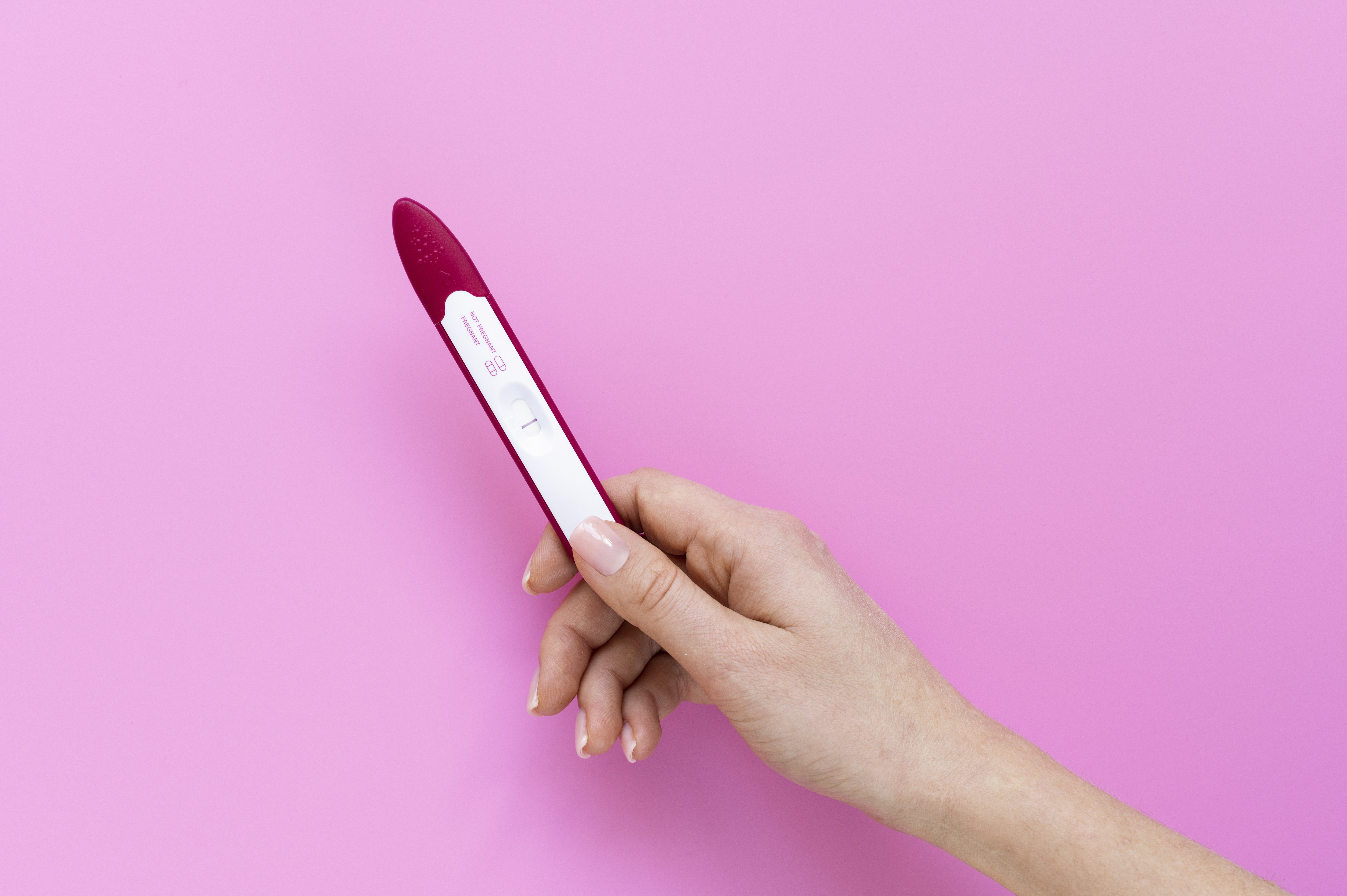
A woman tests her urine at the same time each day when using an ovulation kit, beginning a few days before the expected ovulation day as demarked by cycle length. Once a positive ovulation test is seen, it means that the test line is as dark as or even darker than the control line, which shows that an LH surge has been detected and ovulation will take place soon.
Where the accuracy of reading test results is crucial, it is essential to note that the presence of a second line, no matter how faint, does not qualify as a positive result unless it corresponds in intensity to the first line, thus confirming the presence of an actual LH surge. False positives can occur in women who have high levels of LH, as in the case of PCOS, making it imperative to consider the test result in the overall clinical context when a positive result is obtained.
Basal Body Temperature
Charting of basal body temperature refers to the process of measuring your body temperature every morning using a special thermometer before you get out of bed.
After ovulation, the body produces progesterone that leads to a slight but detectable increase in basal body temperature.
One can track this change over a series of months to help reveal a woman’s menstrual cycle regularity and determine that ovulation is taking place.
Nevertheless, since the increase in temperature takes place after the egg is already released, basal body temperature is thus more of a method to confirm that ovulation indeed has taken place rather than one to predict the fertile days beforehand.
Cervical Mucus Monitoring
During the menstrual cycle, cervical fluid varies in texture and appearance due to the fluctuating levels of hormones. During the fertile window, the cervical fluid becomes transparent, slippery, and elastic, often described as the consistency of raw egg white, indicating that the body is close to ovulation. This can be used in addition to an ovulation kit to provide more information about the fertile window.
Ovulation Apps
An ovulation app works by taking a woman’s data, such as the first day of her period, the length of her cycle, and possibly other symptoms, to forecast her ovulation date and highlight her most fertile days. The reliability of these predictions depends both on the app’s algorithm and on how accurately the data is entered. Ovulation apps are good if you have a regular, predictable menstrual cycle, but they basically just provide an estimate based on average patterns. Women with irregular cycles or hormonal problems could lead the couples to have intercourse at the wrong time if they rely on ovulation app predictions, which can be very far from the truth of the actual fertile window.
When Ovulation Tracking Is Not Enough
For many couples, the regular use of ovulation tools for a few months will bring about a positive pregnancy test and a healthy conception. However, for others, months of tracking may pass without pregnancy, and this is where the advice of a fertility specialist becomes crucial.
Irregular Periods and Unpredictable Cycles
Women who have irregular periods are ovulation tracking has a special difficulty with ovulation tracking. If the length of a cycle changes significantly from one month to another, it is very hard to know when to start testing with an ovulation kit, and both the app and basal body temperature charts get more difficult to interpret. Usually, irregular cycles are an indication of hormonal issues like polycystic ovary syndrome, thyroid problems, or high prolactin levels, which can all lead to ovulation problems and the need for medical treatment, not just better tracking.
Lack of Positive Ovulation Test Result Despite Frequent Testing
When a woman regularly uses an ovulation kit for several cycles and has not obtained a positive ovulation test result, it may be an indication that ovulation is not taking place or is not taking place regularly. The lack of an LH surge on frequent testing is an important observation that should not be attributed to the kit without being evaluated by a fertility expert.
Positive Ovulation Test but No Pregnancy After Several Months
A positive ovulation test is a sign that the LH hormone surge has taken place. However, it is not to be interpreted as a mature egg has been released completely, the fallopian tubes are open, the semen quality is good, or the endometrium is suitable for implantation. There are so many other factors that affect the ability of the couple to get pregnant, and even if ovulation is tracked very accurately, this will not help to find or solve the problems of structural or male factor infertility. If there has been no pregnancy after three to six months of having intercourse at the right time guided by a positive ovulation test, a professional check-up should be the next step.
When Male Infertility Could be a Consideration
While ovulation tracking is strictly related to the female aspect of conception, male infertility is a contributing factor in many instances where couples are unable to conceive. When the best possible tracking and timing have been achieved, and pregnancy is still not forthcoming, Male Infertility Treatment Delhi experts at Zemya IVF & Fertility Clinics can evaluate sperm count, motility, and morphology through a semen analysis. By addressing both male and female aspects, couples gain a full understanding of their situation.
What a Fertility Specialist Can Offer Beyond Ovulation Tracking
Going to a fertility doctor means you get the exact answers and detailed scientific understanding that home fertility testers cannot reach on any level. In Zemya IVF & Fertility Clinics, one of the best Test Tube Baby Centres in Delhi, specialists carry out blood tests for hormones at different stages of the cycle, use transvaginal ultrasound to watch the growing follicles and verify ovulation, and do a full fertility workup for both partners to uncover the actual reason behind the failure of conception.
Based on the results, the treatment may involve Ovulation Induction Medications for regulating ovulation, IUI Treatment in Delhi for the combination of timed insemination and ovulation, ICSI Treatment in Delhi for cases where sperm quality is a factor, or IVF Treatment in Delhi for cases involving blocked fallopian tubes, severe male infertility, or the failure of other treatments.
For those women who aren’t planning to have a baby right away but are worried about their fertility in the future, Fertility Preservation Delhi, along with Egg Freezing Clinic in Delhi at Zemya IVF & Fertility Clinics, offers a method of preserving the eggs when they are of the best quality for later use.