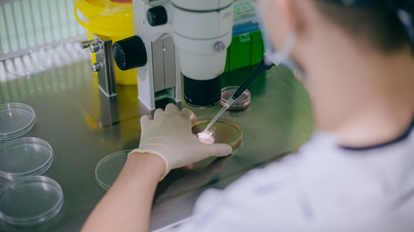
What is the ERA Test?
The Endometrial Receptivity Array (ERA) is a specialized diagnostic test used in IVF to determine the best time for embryo transfer by analysing the receptivity of the uterine lining (endometrium). It helps detect the “window of implantation” - the precise time when the uterus is most likely to accept an embryo.
At Zemya IVF & Fertility Clinics, we offer ERA testing in Delhi to personalize embryo transfer timing, especially for women who have had repeated IVF failures or unexplained implantation issues.
Who Should Consider the ERA Test?
ERA is not a routine test for all IVF patients. It is recommended in the following cases:
- Women with repeated IVF or ICSI failures despite transferring good-quality embryos
- Women with recurrent implantation failure (RIF)
- Cases of unexplained infertility
- Patients with normal endometrial thickness but poor embryo implantation
- Couples undergoing donor embryo or donor egg IVF
- When all other fertility parameters appear normal, but pregnancy doesn’t occur
The ERA test is most useful for identifying a displaced window of implantation, which occurs in around 20–25% of IVF patients.
Benefits of the ERA Test
- Identifies the exact timing for embryo transfer to maximize implantation chances
- Reduces failed IVF cycles due to timing mismatch
- Offers a personalized approach to IVF rather than relying on standard hormone protocols
- Helps couples who have experienced repeated implantation failure without an obvious cause
- Increases the success rate of frozen embryo transfer (FET) cycles
- Improves confidence for patients with previous unexplained IVF failure
ERA Test Procedure Step-by-Step process
The ERA test is performed during a mock embryo transfer cycle, without actually transferring an embryo. Here’s how it works:
Step 01
Endometrial preparation
The recipient undergoes a controlled hormonal cycle to prepare the uterus just as in a real embryo transfer. Estrogen and progesterone are given in specific doses over a few days.
Step 02
Endometrial biopsy
On a specific day (usually after 5 full days of progesterone exposure), a small tissue sample is taken from the uterine lining using a thin catheter.
- The procedure is done in-clinic.
- It takes about 5–10 minutes.
- It does not require anaesthesia, though mild cramping may occur.
Step 03
Sample analysis
The endometrial cells are sent to a specialized lab where over 200 genes related to endometrial receptivity are analyzed using advanced molecular technology.
Step 04
Report and interpretation
The ERA test result will determine if the endometrium is:
- Receptive – transfer can be done at the standard time
- Non-receptive (pre-receptive or post-receptive) – timing needs to be adjusted for better implantation
Step 05
Personalized embryo transfer
Based on the ERA result, a personalized embryo transfer (pET) plan is created for the next frozen embryo cycle. This significantly improves the chances of successful implantation.
Risks and Limitations of the ERA Test
- Mild discomfort or spotting after the biopsy
- Rare chance of infection or cramping
- ERA does not address issues related to egg or sperm quality, only the timing of implantation
- Not all implantation failures are due to timing - other tests may still be needed
- Adds time and cost to the IVF process, as it requires a mock cycle
Despite these limitations, ERA has helped many couples achieve pregnancy after repeated IVF failures.
Why choose Zemya IVF & Fertility Clinics?
At Zemya IVF & Fertility Clinics, we design each treatment plan around your specific needs and medical history.
With over 40+ years of combined experience and more than 10,000 healthy deliveries, our team is committed to helping you achieve your dream of parenthood with skill, care, and compassion.
Here’s what makes Zemya IVF & Fertility Clinics one of the top 5 IVF and fertility centres in Delhi:
Each treatment is designed specifically around your medical history, goals, and emotional needs.
Our doctors and embryologists are internationally accredited and bring decades of hands-on fertility experience to every case.
We explain everything clearly—no hidden fees, no unnecessary procedures.
Get access to the best care at a cost that respects your budget.
From lab facilities to diagnostic equipment, we use the latest in reproductive science to increase your chances of success.
Whether you’re just starting out or seeking a second opinion, Zemya IVF & Fertility Clinics is here to guide you every step of the way, with experience you can trust, and care you can feel.
Frequently Asked Questions
The biopsy may cause mild discomfort or cramping, similar to a Pap smear. Most women resume normal activities the same day.
Yes, especially for women with repeated implantation failure. By identifying the optimal day for transfer, ERA increases the chance of embryo implantation.
No. ERA requires a mock cycle. After the result, frozen embryo transfer is planned based on the recommended timing.
Results are usually available within 2–3 weeks after the biopsy.
Studies suggest that around 20–25% of women have a shifted window, meaning standard transfer timing may not work for them.
Not necessarily. It’s most useful for women who’ve had two or more failed IVF cycles with high-quality embryos.