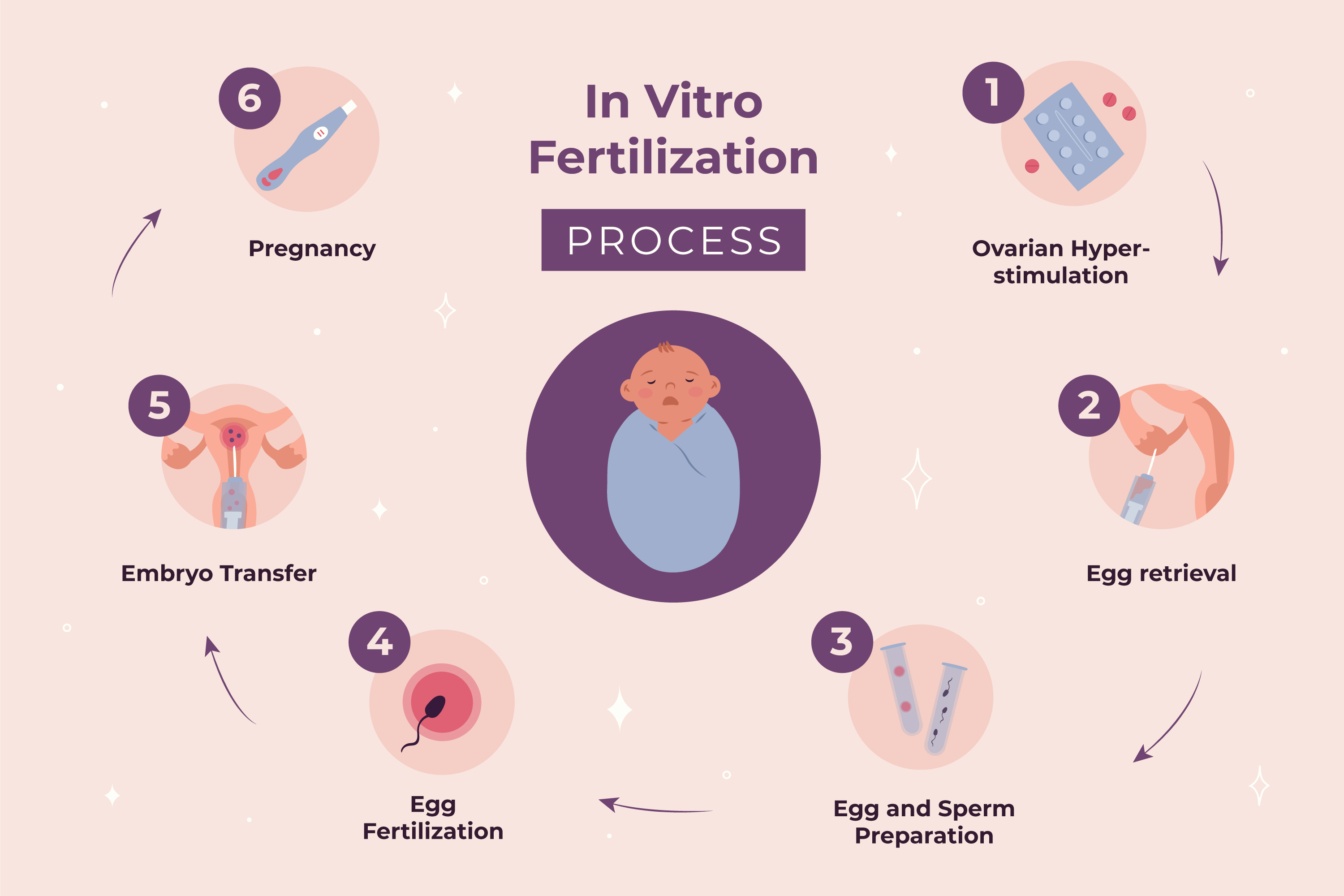
- IVF is the abbreviation for in vitro fertilization, which refers to the fertilization process that occurs outside the body.
- The IVF cycle consists of ovarian stimulation, egg retrieval, fertilization, embryo culture, and embryo transfer.
- Intracytoplasmic sperm injection is beneficial in cases of low sperm count or poor sperm quality.
- The blastocyst stage enhances implantation success.
- Single embryo transfer decreases the risk of multiple pregnancies.
- Frozen embryo transfer enhances cumulative success rates.
- Preimplantation genetic screening assists in the identification of genetic disorders.
- IVF success is determined by age, ovarian reserve, sperm quality, and laboratory expertise.
- Ovarian hyperstimulation syndrome is a risk that can be managed with appropriate monitoring.
- Selecting the appropriate Fertility Clinic in South Delhi makes a huge difference in the success of pregnancy.
Being infertile is very stressful emotionally and physically; however, thanks to the recent progress in assisted reproductive technology, many couples have become parents. If you are thinking about IVF, knowing the whole IVF treatment step-by-step process explained by South Delhi experts will probably give you a feeling of confidence and readiness.
At Zemya IVF & Fertility Clinics, one of the premier clinics for IVF in South Delhi, each patient is attended to personally by the most experienced doctors and embryologists. Being recognized as the best IVF Clinic in South Delhi, the clinic not only has excellent skills in reproductive medicine but also pairs them with a highly sophisticated laboratory to get better results.
Hence, here are the steps involved in an IVF cycle.
Step 1: Initial Consultation and Fertility Assessment
The first step for your IVF treatment is to have an initial consultation at a reputable Fertility Clinic in South Delhi. The IVF Specialist in South Delhi will evaluate:
- Your medical history
- Your fertility history
- Ovarian reserve
- Sperm quality
- Hormonal levels through blood tests
- Ultrasound of the uterus and fallopian tubes
IVF can be recommended in cases of unexplained infertility, male factor infertility, or advanced maternal age after other treatments like intrauterine insemination have failed.
The screening procedure might also involve a test for infectious diseases before the commencement of the treatment cycle.
Step 2: Ovarian Stimulation
Another step in the IVF cycle is ovarian stimulation. Most times, patients get IVF injections or fertility drugs, which help the ovaries to produce multiple eggs rather than just one egg.
The medicines used help in increasing the chances of several mature eggs being harvested. Doctors monitor very closely the:
- Follicle development through ultrasound
- Hormone levels through blood tests
Egg-generating cells become ready when the follicles reach their mature stage; hence, a trigger shot containing human chorionic gonadotropin (hCG) is given to complete the egg maturation process.
Proper monitoring is the only way to avoid ovarian hyperstimulation syndrome, which is a condition that may make you feel bloated, and you may also gain weight quickly.
Step 3: Egg Retrieval Procedure (Oocyte Retrieval)
About 34-36 hours after the trigger injection, the egg retrieval procedure, also known as oocyte retrieval, is carried out.
The minor surgical IVF procedure involves:
- Ultrasound-guided needle aspiration
- Follicular fluid aspiration
- Mature egg aspiration
The procedure is minimally invasive and takes around 20-30 minutes.
An advanced Test Tube Baby Centre in South Delhi uses the updated methods to make the egg retrieval process comfortable and safe.
Step 4: Fertilization Creating Healthy Embryos
Following the retrieval of eggs, fertilization is carried out in the laboratory. This is the core or the heart of the entire process of in vitro fertilization (IVF).
There are two methods:
- Conventional IVF- Eggs and sperm are combined in a culture dish for fertilization.
- Intracytoplasmic Sperm Injection (ICSI)- If the sperm count is low or the quality of the sperm is poor, a single healthy sperm is selected and injected directly into the egg. This is an intracytoplasmic sperm injection ICSI procedure.
Some patients may require sperm donation or egg donation.
Step 5: Embryo Culture and Development
A fertilised egg or zygote, after fertilization, starts dividing into two cells. Thus, embryo culture essentially represents the process by which embryologists track embryo development under a microscope.
Day 5 embryos can develop up to a blastocyst stage, which is more likely to get implanted.
Zemya IVF & Fertility Clinics’ advanced labs, leading Infertility Clinic in South Delhi, are committed to:
- Keeping track of embryonic development
- Making healthy embryos
- Choosing the best quality embryos
Step 6: Genetic Testing (Optional)
Thereafter, some couples decide to go for:
- Preimplantation genetic diagnosis (PGD)
- Preimplantation genetic screening (PGS)
Both these investigations allow identifying genetic defects, thereby decreasing the chances of birth abnormalities. Hence, the benefit of such testing is mainly for women who are of advanced maternal age or couples who have inherited conditions.
Step 7: Embryo Transfer
The following step in the IVF process is embryo transfer.
There are two methods of embryo transfer:
- Fresh embryo transfer – It is performed in the same cycle
- Frozen embryo transfer (FET) – It involves the use of frozen embryos after the freezing and thawing process
Physicians may suggest a single embryo transfer to lower the chances of multiple pregnancies and multiple births. This will increase the chances of a single pregnancy, thus lowering the chances of low birth weight.
In some instances, assisted hatching may be required to enable the embryo to attach to the uterine lining.
Step 8: Luteal Support and Pregnancy Test
Following the embryo transfer, hormones are given to help the implantation process.
After about 14 days, a blood pregnancy test is performed to determine if implantation has occurred.
If the result is positive, an early ultrasound will confirm the pregnancy in the IVF womb with the monitoring of fetal growth.
What If IVF Fails?
Not all first cycles of IVF are successful. Some couples may need:
- Multiple cycles
- Frozen embryo transfer using cryopreserved embryos
- Egg donor programs
With current assisted reproductive technology, cumulative success rates increase with repeated cycles.
Risks and Considerations
Even though IVF is a safe procedure, there are risks involved. These risks include:
- Ovarian hyperstimulation syndrome
- Multiple births
- Rare infection after oocyte retrieval
- Emotional stress
By selecting the Best IVF Clinic in South Delhi, the risks associated with IVF are managed.
Advanced IVF Options Available
If the patients go to a full-fledged IVF Centre in the South of Delhi, such as Zemya IVF & Fertility Clinics, they may benefit from:
- Natural cycle IVF
- Oocyte cryopreservation
- Embryo cryopreservation
- Fertility preservation
- Usage of sperm donors or egg donors
- Treatment for male factor infertility
Clinics are guided by standards that are in line with the policy of global bodies like the American Society for Reproductive Medicine and the Society for Assisted Reproductive Technology.
Who Should Consider IVF?
IVF treatment can be advised for:
- Blocked fallopian tubes
- Low sperm count
- Male factor infertility
- Unexplained infertility
- Advanced maternal age
- Failed intrauterine insemination
- Poor ovarian reserve
Visiting an experienced IVF Specialist in South Delhi will ensure proper diagnosis and treatment.