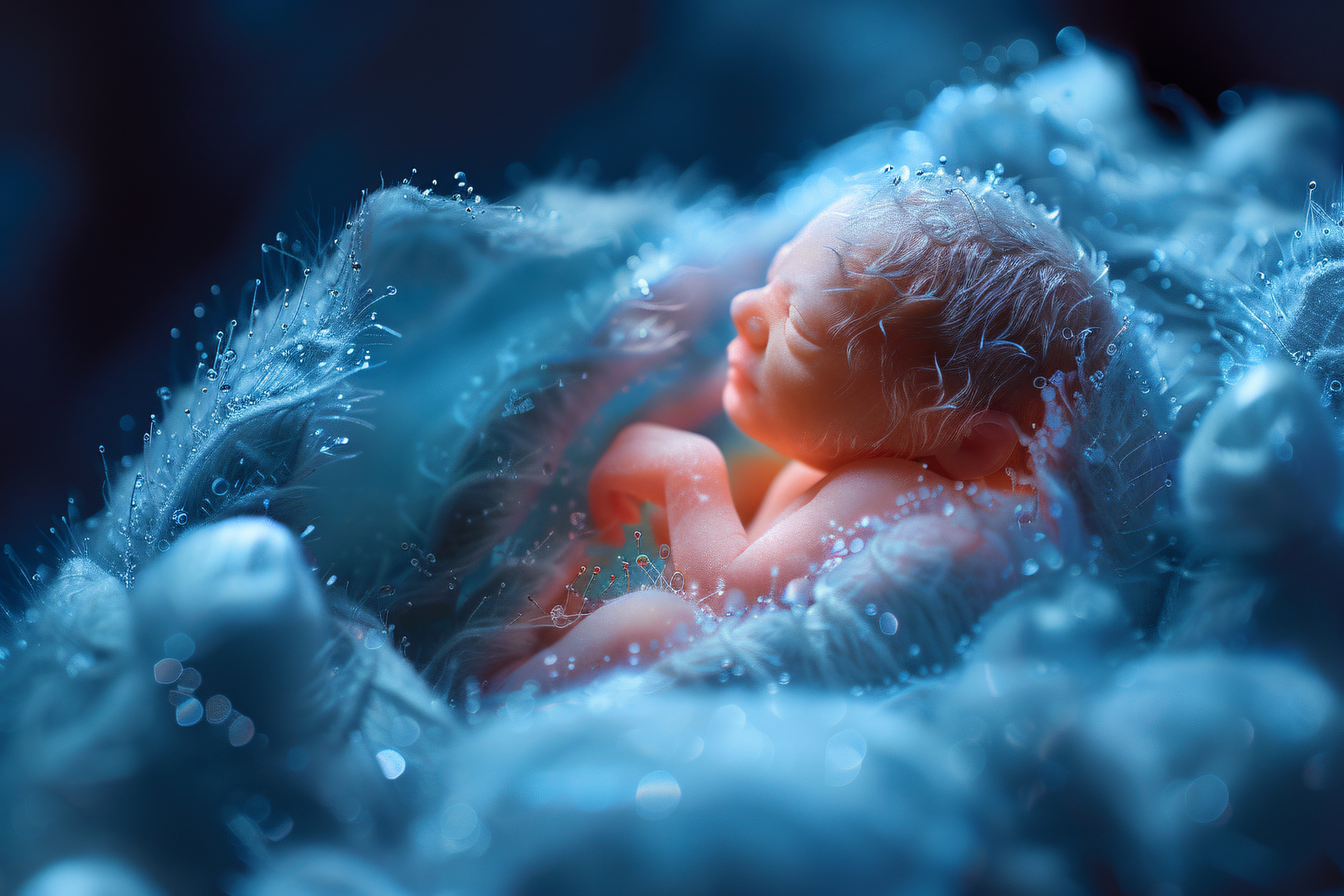
- Artificial intelligence in embryo selection deeply examines the embryo development by analyzing thousands of time-lapse images and identifying the cell expansion stop, division processes, and shape change that are indicators for successful implantation.
- What an embryologist does is supervision and monitoring, while AI decision support systems work hand in hand with an embryologist, providing clinical judgement with objective data, driven analysis.
- Besides, AI can evaluate many factors at the same time and with the same level of attention in all embryos of a single IVF cycle. Such uniformity is impossible even for the best human embryologist.
- Indeed, AI-assisted embryo selection has had a major impact on live birth prediction accuracy beyond morphological criteria assessment, effective alone.
- AI enables the implementation of single embryo transfer by locating the most competent embryo accurately and thereby reducing the risk of multiple pregnancies without lowering the rates of successful outcomes.
The changeover through IVF treatment has always been hinged on one momentous decision, which embryo to implant. Over the years, this choice has been made by skilled embryologists who look at embryo morphology through a microscope and analyze the embryo’s appearance, the embryonic development stage, the zona pellucida’s condition, and the inner cell mass quality to find the one that is likely to lead to a healthy pregnancy. Although the proficiency and knowledge of a well-trained embryologist are still indispensable, artificial intelligence is now revolutionizing this crucial phase of the IVF procedure and offering unprecedented accuracy, reliability, and forecasting ability in embryo selection that is significantly enhancing IVF results by 2026. At Zemya IVF & Fertility Clinics, a premier IVF Treatment in Delhi centre, incorporation of AI technology in fertility treatments means our promise to patients that they will receive the most state, of, the, art and efficacious care at all times.
The Challenge of Embryo Selection
In any given case of IVF treatment, the eggs are stimulated in the ovaries and are ready in multiple numbers. They are then fertilized and cultured in the lab for a period of five to six days. It is at this stage of blastocyst formation, when the inner cell mass and outer cell layer are developed in the embryo, that it is selected on the basis of well-established morphological criteria by the embryologist. While it is true that embryo morphology is an important criterion for selecting embryos in any case of IVF treatment, it is also equally true that it is not an exact science and does not always guarantee success in terms of implantation and pregnancy. It has been observed that two embryos may be identical in every aspect, but their implantation potential may be very different from each other. Moreover, chromosomal problems are a major factor in IVF success and are not visible in embryo morphology.
Preimplantation genetic testing is a more definitive method for assessing chromosomal abnormalities, yet it requires biopsying the embryo, increases the cost and complexity of the IVF procedure, and may not be suitable or required for every patient. AI-assisted IVF technologies are being developed to meet the demand for a non-invasive, highly accurate method of selecting embryos that have the highest likelihood of resulting in pregnancy, and these technologies are now becoming part of clinical practice at top fertility clinics globally.
How AI Is Transforming Embryo Selection
Artificial intelligence uses a fundamentally different methodology in selecting embryos, unlike traditional assessment of morphological criteria, in which only one picture is analyzed at a certain stage of development. Thousands of images are analyzed by AI, taken in real-time throughout the process of embryonic development, from fertilization to the blastocyst stage, observing the exact rate of cell division, timing of each step, symmetry and regularity of cell mass formation, and many other factors that cannot be observed or measured by humans.
Most of these AI tools were trained using large databases of embryo images in IVF cycles that had outcomes recorded, such as whether an embryo resulted in a live birth or not. These outcomes were then mapped to the developmental features the AI picked up during the analysis. By means of this machine learning method, the AI constructs an extremely advanced prediction model that is able to evaluate any new embryo by comparing it with successful implantation and healthy pregnancy patterns. Thus, it is able to produce a hierarchy of embryos according to their developmental potential and live birth prediction score.
The end product is a decision support system that assists rather than replaces the expertise of the embryologist, offering an objective and data-driven analysis to complement judgment and decision-making in fertility clinics to make more informed decisions on which embryos to transfer and in what order.
What AI Considers That Human Assessment Misses
The strength of AI in the selection of embryos is that it can analyze multiple factors at the same time and consistently in all the embryos in the course of the IVF treatment, without the fatigue and inconsistency that can befall even the best human evaluator. The analysis of the images by the AI involves the assessment of the cell kinetics, which is the exact timing of the division of each cell in the course of the development of the embryo, and which has been found to be an important determinant of the developmental potential that is not related to the morphology of the embryo. The assessment also involves the evaluation of the regularity of the formation of the cell mass, the level of fragmentation, the expansion of the blastocyst, the quality of the inner cell mass, and the characteristics of the zona pellucida, which can be too minute to be seen with the naked eye.
Significantly, AI-driven systems are capable of detecting patterns indicative of chromosomal anomalies without necessitating invasive genetic tests in each instance. However, preimplantation genetic testing is still the reference standard for an accurate chromosomal evaluation, and at Zemya IVF & Fertility Clinics, an ICSI Treatment in Delhi, it is still one of the recommended treatments for the patients with identified risk factors, such as advanced maternal age, or recurrent miscarriages or the cycles of IVF with the poor outcomes in the past, etc.
AI and IVF Outcomes in 2026
Clinical evidence of the use of AI in embryo selection has also demonstrated significant improvements in recent times, and several studies have demonstrated the advantages of using AI in embryo selection in terms of increased implantation rates, decreased miscarriage rates, and accurate prediction of the chances of live birth. It is now 2026, and the concept of the use of AI in embryo selection is no longer in the research phase in the research lab but has become part of the mainstream treatment offered at the top fertility clinics.
For those seeking IVF treatment at Zemya IVF & Fertility Clinics, embryo selection assisted by AI is a significant enriching component, ensuring high quality and accuracy in the embryo assessment process. Our method integrates the decision-making of seasoned embryologists with the technological capabilities of AI image recognition and developmental kinetics evaluation, thus enabling us to be more sure and consistent in choosing the most suitable embryo for transfer, thereby supporting the possibility of a successful first transfer and at the same time, reducing the number of cycles most patients are subjected to before getting pregnant.
AI and Single Embryo Transfer
One of the most important applications of AI in embryo selection is its potential to contribute to the trend of single embryo transfer. The rationale for transferring more than a single embryo has, in the past, been based on the uncertainty of which embryo has the highest developmental potential, but this practice has a number of associated risks, including multiple pregnancies, preterm delivery, and low birth weight, among others. The potential of AI to identify more accurately which embryo has the highest potential of achieving pregnancy, therefore, supports the trend of single embryo transfer without compromising the chances of a successful pregnancy while enhancing safety.
AI-assisted embryo ranking is regarded at Zemya IVF & Fertility Clinics as one part of the individualized decision-making process about embryo transfer numbers at IUI Treatment in Delhi and other assisted reproduction services offered along with IVF. Safety and well-being of the patient and potential pregnancy are always given the highest priority by the clinical team.
Egg Freezing and AI
Another area where AI technology is being employed is in the evaluation of oocytes, or eggs, before they are actually fertilised, and this is allowing embryologists to assess the quality of eggs and determine which of the eggs are more likely to be fertilised and develop into quality embryos.In the case of women who undergo egg freezing treatment at the Egg Freezing Clinic located in Delhi, which is part of the Zemya IVF & Fertility Clinics, the evaluation of the eggs with the help of the AI technology is providing an added dimension to the process of egg banking, wherein the best quality eggs are being selected for the process from the egg retrieval cycle.